This is for gardeners and those with an interest in plants and nature.
I would appreciate support in the form of likes, subscriptions, and sharing. All completely free.
The Christian Thoughts and Posts
I have another Substack newsletter that serves the Christian related videos on my YouTube channel (which, BTW, has a new video posted in the prayer series).
This has posts which are presently tied in with the videos on my YouTube channel.
The latest Substack post being on the topic of Christian Simplicity.
For the newest posts on my Substack, choose from Christian or Garden topics.
You can subscribe directly from this page! Gardening Substack:
Christian Newsletter:
I’m pretty excited about Substack because it is a great community and fun to work on. Today I made my first in-house video from the garden article and posted it on Facebook. Aside from using a wonky AI voice (won’t do that again) it turned out pretty well.
Hungarians like to decorate things and they are quite good at it. In fact, certain areas of Hungary are particularly well known for their decorative arts. If you love folklore art and paintings, then you will love the many distinct Hungarian styles that are displayed here.
From what is probably the most famous, Kalocsa folk art, to other regions like the Matyó, the folkstyle decorative art is alive and thriving.
“Flowers and leaves, sometimes a bird or a spiral ornament, are the principal decorative themes. The most frequent ornament is a flower with a centerpiece resembling the eye of a peacock’s feather.” – Folk-Art-Hungary.com
You can see the identifying characteristics from patterns in the ancient forms, such as the Szekely gates (kapu), to the inclusions of the flowers and swirls in the modern illustrations of Willy Pogány, who brought his Hungarian inflected design to the covers of magazines and the pages of books in the early 20th century.
Interiors with Flowered Motifs
Kalocsa wall painting inside home
>Try Your Own Hand At Hungarian Painting
Find tutorial design guides and get your paints and brushes out.
Elements Of Magyar Style:
Color and intricate designs that recall nature in a stylized way.
Strongly cover the entire surface.
Use highly saturated pigments which create bright colors in primary and secondary hues.
Be colorful and creative like the Hungarians!
Use Folk Art Designs To Decorate Items Artistically
The photos and how-to videos on this page can be your inspiration.
Wall Painting, Pingálás, in Kalocsa Style
Can you name the flowers? Roses, dahlias, bellflowers are some of those included in this floral design.
Szekely Kapu, Highly Decorated Gates of Old Hungary
Szekely kapu renovated with bright painted colors.
History of the Szekely Kapu – Decorated Ancestral Gates of Hungary
This entry is from the Hungarian Club site.
Origins of the ancestral carved gates of Transylvania span thousands of years before [Christ] and transcend beyond the boundaries of the Carpathian Mountains to Mesopotamia and the Far East. Similar to the ancient “Silk Route” that connected Central Europe to the Far East…
This ancient art with a system of mythical symbols and richness of form is still practiced and still inspires Hungarian Szeklers of Transylvania in creating their home environment and preserving their traditions to this day. The “Székelykapu” had symbolic meaning which separated East from West artistically as well as geographically and politically
…Runic inscriptions on front of the gate “The Lord has brought thee here” while on the other side departing guests can read “The Lord be with thee”.
[Ancient decorations from Ur had similar designs to]…motifs of Hungarian but especially Transylvanian Folk Art such as the upward scrolling or spiraling lines, tree of life, sun as central motif, runic symbols, five and eight petal rose, pomegranate and cornflower.
…In the top center under the roof and pigeon loft, the traditional sign of the sun, symbol of Úr is carved and under it the ancient greeting ISTEN HOZOTT.
…the main post which separated the large wagon gate from the small walk-in gate, displayed the family history in runic writing (rovàs iràs). Each generation added its share of history and when all sides were filled, a new supporting post was hewn from oak and placed on either side of the walk-in gate.
As runic writing became obsolete, the custom of carving family history into the gateposts also faded away. Besides the inherited symbols and decorations, only the greeting, name of the homestead builder and date of completion was carved into the gate and remains as tradition in our time.”
Since these gates were a part of the estates with a wealthy class of family , they were fallen into disuse during the Communist times. Many remaining gates no longer had the painted colors that are shown in this photo.
“the Székely gates are a beautiful example of folk architecture. In 1920, after the Treaty of Trianon ceded Transylvania to Romania, many Hungarians left the region as refugees. For many, the destination of choice was Debrecen: a market town near to the new border. In addition, several faculties of the university in Kolozsvár, now Cluj-Napoca, were transferred into the university at Debrecen. As refugees, they brought only their most important possessions – often-times including their gates. Hence, Debrecen has quite a few of these old gates built into 1920s-era homes.- An American in Debrecen “
This Gate was Once Painted With Bright Color
Hungarian Gate | Source: photos from Wikipedia Commons
Ancestral Motifs
The reason embroidery has become so widespread in folk art is due to the ancient custom of dowry.
A proper Hungarian girl was expected to bring a dozen ornate pillows and embroidered sheets, two to four decorated featherbeds and six to eight embroidered tablecloths to the marriage. [1]
Ancient Church Decoration
Hungarian Painting in Church
Folk Art Painting Decorates Door Surfaces
Arts are preserved in the Kalotaszeg region. It is common to see decorated doors in kitchens and other areas of the home. Source: hungarianambiance
Create Your Own Folk Art
Like Tole painting, the folk arts of Hungary were usually practiced by the common people. Most can be accomplished with a bit of practice.
Today, this naïve style is loved as much as ever. The Hungarian version of folk art painting has the usual floral and some animal motifs, but the way the colors are chosen, as well as the covering of the object is distinctive.
Not only are the designs overall imprinted with Magyar style, but the various reqions stand out one from another in colors and motif, as discussed here in this article.
The Matyö roses and colors are comparable to Rosemaling, a Scandinavian folk art form. The Kalocsa region has much lighter palette and hand, almost a feeling of French Provence folk art- although no one would mistake one for the other.
Imagine Making Your Own Designs
Imagine a Forest: Designs and Inspirations for Enchanting Folk Art Create art with traditional styling and motifs from Folk Art. Hungarians love to decorate surfaces with this type of painting, and you can, too. Inspiration that will guide you to dream up ideas for your own decorative pieces. Buy Now
Hungarian Design
Compare the painting and embroidery motifs of Hungarian Design, they are very similar
Kalocsa Region Is most Famous for Folk Painting Today
The word Kalocsa originates from the Latin colocae which means “made from mud”.
Wallpainting is one of their most famous forms of decoration, and folk artists paint colorful flowers against the whitewashed walls of their homes. Even the outdoor mud daubed ovens do not go without decoration!
The rose and tulip are the popular favorite motifs, but pansy, forget-me-not, carnation, snapdragon, foxglove, lilac, poppy, cornflower, black locust blossom, rosemary,- and even more than that- find their portraits painted in the unique stylization of the Kalocsa artists who are mainly women.
Called “Writing Women”, they draw and then embroider their designs on white and pastel fabrics or paint them on white walls. Today, these embroidered goods are highly desired. It is believed that the decorative motifs from the embroidered clothing was the basis for the painted designs that are now used on all sorts of objects in daily life.
Fine Painted Porcelain
Other Regions Of Hungary
Harta, a community consisting mainly of German inhabitants who began arriving in 1723-24 to replenish the population and farm the land, developed some very fine decorative painting skills which they applied to furniture and small household items. The key motif is a centered bowl full of flowers.
The Swabians history of dates back to the invitation to German people to repopulate Hungary after the devastating wars with the conquering Muslim powers.
The Kalocsa Folk Art Painting How-To
An interesting look at artist drawing and then painting a Kalocsa style flower motif.
Hungarians love to cover surfaces with colorful decoration.
Painted Furniture
Painted Furniture
Matyó
From the region of Mezökövesd
A decorative style for the people of this region of Hungary. As a people they are considered of Slovakian origin.
A book on their designs says, “The Matyó people are one of the ethnographical groups that emerged relatively late. It was only in the 18th-19th centuries that the folk culture of Mezökövesd and the villages of Tard and Szentistván traditionally regarded as belonging to it became distinct from their environment, largely due to their Roman Catholic population. Their decorative art acquired its distinctive forms in this period, differing even from each other in their details. ” –The Matyó Roses After the National Exhibition in 1896, their decorative embroidery became popular.
They became famous for their rose designs, and many of their crafts have a single color, predominantly red.
Matyo folk art painting on ceramic
Hungarian Painted Pottery
Example of Herend porcelain with a fishscale design. Now known as a fishnet pattern, it is on many of the company’s creations.
Besides furniture and wall surfaces, the common pottery is painted with the same beloved motifs in the common pottery. When in Hungary, these wares are sold in road stands, and in many shops.
However, if you wish for top quality porcelain sculptures and other beautiful products, look for the name ‘Herend’.
Fine porcelains have been made since 1826 in the Herend company.
Hungarian “Writing” Design
Hungarian Artist Painting On Ceramics
Visit Hungarian Decorative Arts Vicariously
Even if you don’t understand the language, the beauty of the designs and the land speak for themselves.
Willy Pogany, Hungarian Artist
Willy Pogany Art. Hungarian folk art motifs are incorporated into his painted illustration.
In updating my Blog Resource Page, all the information written moved here. It is still current and helpful, but things I recommend and why need revision. This post has more explanation of the why and wherefore for using certain choices than I think is best for a no-frills resource list.
If you are new to blogging, sort through the following advice for timesavers and tips.
Free Themes
I recommend the default WordPress themes to start out with, unless you are sure you know what you want. There are free child themes available for them. Between the choices that all have the name “Twentysomething” (series starting with ten, you should be able to find a theme that suits your blogging needs.
The Swift theme was one that I used on this site for awhile and warmed up to it.
Update I had to change the Swift theme to the PageLines since the hackers kept getting into the Swift theme, which shows that security is a big deal in choosing a theme.
I have always liked the typography of PageLines, though I did miss the bright colors of Swift. Plus, I don’t think there should be a free theme that only gets updated to work well, forcing you to buy the premium version. That is something to watch out for, although it is much less likely to happen now. Not a problem with the bigger theme developers who have a reputation to stake.
I did a test-drive of the default free themes on this site before deciding to use Divi.
Paid Themes
I use Elegant themes (Divi) in my garden sites, and one of the earlier ones on TrueGrit, a religion blog.
I switched from experimenting with their new themes to using mainly their pride production: the Divi theme. It has pros and cons. Although as time goes on the improvements are wiping out the negative opinions.
Pros
Divi is highly customizable and can do about anything you want it to.
It is responsive (extremely important, now).
Easy to work with.
Cons
The main thing I don’t like is one of the things I also do like: the pagebuilder.
The pagebuilder uses shortcode components that helps you build a page the way you want it. Making landing pages, etc is simple. But if you change from the Divi to another theme like the WordPress default, all the pages which you built show only the shortcode blocks .
This is highly inconvenient, to be locked into one theme.
Solution?
A plugin that helps to sort out the shortcodes coding on the site, or changes made by the ET developers to make all of the shortcode reside within a plugin that remains no matter what theme is chosen.
Looking For A Theme
Find features you need.
Pleasing layout and typography for readability.
Responsiveness now tops the list of needed features.
Support might be important for you, and regular updating certainly will be.
Now Using Fourteen Sixteen Theme
Further Update: WordPress made the good looking magazine theme for 2014 and I switched to it. I am very happy with so many of its features that I imagine staying with it for quite awhile.
Further, Further Update: I kept updating until the twentysixteen theme. It doesn’t have the customizing plugins, nor is it easy to change the look. I love it for its functionality, though.
It is a good beginning theme. However I will say that for a complex site like my Garden site, the Divi pro theme from Elegant Themes is better suited to what I ask from WordPress.
There are several good social sharing helps, right now I use Shareaholic, which includes related posts I used YARPP for years, and that worked well, too -especially with new improvements it has now.
Akismet to deal with Spam. Bruteprotect to deter hackers. These are in the Jetpack. Yes, I use it.
There is controversy about the Jetpack, but I used enough of its features to make it worthwhile. It disturbs me to know that some feel it bloats and greatly increases loadtime for the site.
I switched back to YARPP after Shareaholic made changes that I really didn’t like. I no longer recommend it and deleted the plugin from all my sites.
Disclosure: I use affiliate links for some of the resources. This in no way influences the opinions I post. Everything written is transparent and based on my experience.
First thing, and don’t let it scare you, is that the next time you roast a chicken you need to save a little of the chicken fat. That ingredient is also known as schmaltz, which you can make from scratch and keep on hand.
Don’t worry if you don’t have any on hand, or if you decide against it, you can still bake this lovely breakfast bread. Just know that the chicken fat adds a certain “je ne sais quoi pas” that is fabulous. Know that it can add flavor to noodles and vegetables, too.
It will feed a family of 6, unless they are swept away by your wonderful home baking talents and gobble more than their fair share.
As with all recipes, you can substitute the fat that you feel best using, add the raisins or not, etc. but if you want the authentically delicious taste, stick with the recipe.
Yeast Raised -Approximate Cook Time
Prep time: 3 hours 30 min Cook time: 1 hour
Ready in: 4 hours 30 min Yields: 6 people
Ingredients
5 cups Flour, Sifted
1 Tbsp. Sugar
Small amount Water, heated
1 package Yeast
1 Tbsp. Chicken Fat, melted
1/2 lb. Butter
1/2 stick Margarine (or butter)
3/4 cup Sugar
1 tsp. Salt
1 Rind of Lemon, grated
3-4 Egg Yolks
1/4 tsp. Vanilla
2 cups Golden Seedless Raisins
2 cups Warm Milk
Cinnamon and Sugar, Mixture
Place flour in a large bowl and make a hole in the middle.
Add yeast, sugar, and warm water in center to activate the yeast. Let stand 1/2 hour.
Cut up butter, margarine and add chicken schmaltz. Then add to flour mixture with the 3/4 cup sugar, salt, lemon rind, vanilla, egg yolks, and warm milk.
Knead until bubbles appear.
Let dough rest until it rises.
While waiting for dough to rise, soak raisins in some hot water for about an hour. Squeeze out water and then add to risen dough.
Then knead dough well. Allow dough to rest.
Preheat oven to 350 degrees.
Grease a large tube pan (angel food cake pan).
Divide dough into 2 pieces shaped into balls. Roll out each like thick pie dough, sprinkle with cinnamon sugar and roll up tightly.
Twist each into a rope, braid together, then spiral into the angel food pan.
Allow to rise for final time in the pan, then bake for an hour at 350 degrees.
Oma’s Tube Pan Breakfast Coffee Cake
German cooking has a layover with Eastern European countries such as Hungary, and Czech Republic. Certain cooking techniques are common to many cuisines, thus this video will be a great guide.
Another Name For This Coffee Cake
German’s call this type of cake Kugelhoph
More eggs, less fat, and I love Oma’s helpful tips.
My grandmother’s recipe has more shortening and is a rolled dough, rather than a soft batter cake.
You may notice in some of the old recipes that the amount of eggs and fat can seem more than what you are used to. I think many of the changes came about when sugar was not so dear, and before the large amounts of egg and fat became frowned upon.
Speaking of fat, many older recipes called for lard, and until recently that was the preferred shortening for pie crust. It is still considered more a more flavorsome ingredient than vegetable fats.
When I was first cooking in the sixties and seventies, you find “Oleo” or margarine is widely called for. This is no longer considered a more healthy choice, and I haven’t bought margarine in years.
If you want a healthier diet the answer is probably to take much smaller portions of the carb-laden cakes and add fruits to bring out full flavor, make it more filling and satisfying. I am of the opinion that it isn’t cutting out desserts, but cutting down amounts that is the answer. Maybe that is a cop-out because I love them so much.
European Directions for Similar Coffee Cake
It is sometimes confusing when switching from European to English measures (and vice versa). Yet many solutions online make the process easier.
Using Bundt Pans for Coffee Cakes
Many coffee cakes are simply baked in square pans, but if you have a larger recipe like this one a bundt pan gives a much prettier presentation. In line with the original intent of serving a simple delicious sweet when company drops by, makes this pan a real boon to the baker.
While there are variations in form, most have a decorative shape with a central opening. This center circle is perfect for some flavored whipped cream! Or simply dust the finished, cooled cake with confectioners sugar.
Bundt forms have some beautiful curves for drizzles and glazes, too.
Don’t underestimate how this shape will add to the tempting look of your cake.
Fat In Your Diet
People who give you Hungarian recipes so often say, “It isn’t for dieters” or tell you it is unhealthy in some way. The recipes do traditionally incorporate plenty of dairy and fat, usually in the form of sour cream and butter. But also with nuts and eggs, etc.
The new nutritional information that is transforming what we know about healthy diets is that fat is no longer the bad guy.
Usually what we need to watch out for is the modern inclusion of antibiotic and hormones, along with other things that are so different from our grandmother’s food sources; things that cause inflammation in our bodies. Some fats are necessary and they certainly are a source of flavor that make the foods more satisfying to our appetite.
What are you going to do? Tailor your diet to your own health needs, and use the best nutritional information available.
I remember a special jar to save bacon drippings that was always in my mother’s and grandmother’s kitchen. I don’t do that, but I think the idea of using schmaltz might have a place in my cooking future. Jewish cooking often includes it. It is what makes the difference between plain old noodles and delicious noodles, for me.
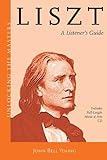
Franz Liszt, was born October 22, 1811 in Raiding, near Sopron, Hungary in the Austro-Hungarian Empire. His father worked at the court of Count Esterházy, and gave him his first music lessons. He became an established concert performer by 12 years old, a prodigy. The Austro-Hungarian nobility gave him opportunities to study abroad and as a result his Hungarian language skills were poor, and French was his preferred language. In Vienna, on December 1,1822, he made his first appearance beginning his career as a Hungarian virtuoso pianist and composer.
Carl Czerny had taught him, Chopin and Camille Saint-Saëns were his friends, he is said to have performed for Ludwig van Beethoven. Hector Berlioz, Robert Schumann, and Richard Wagner were proteges and his daughter married Wagner. He lived in a time of great musical creativity and added his own genius to the fermenting mix of Romanticism.
He lived in the Romantic Age, when emotions were considered paramount. Whether this affected his relationships is unknown, but he did have numerous affairs, with a tumultuous personal life.
Liszt’s piano compositions are among the most technically challenging. He invented the term ‘Sinfonische Dichtung’ (symphonic poem) for orchestral works. History has recorded his great works and prestige as a performer, even though there were those who criticized and did not acclaim him during his life.
In 1861, he went to Rome, where he concentrated on religious works, and teaching. His last appearance was at the concert of the Musical Society of Luxembourg. His death occurred on July 31, 1886, at age 74.
Heard of Lisztmania? Read on and listen to the music…
Biography and Music
Portrait of Franz Liszt 1839
young Franz Liszt
Teacher of Great Musicians
after a bout of Lisztomania took place, Liszt taught others
It has been said that Liszt passed through six lives.
(1) he lived the life of a precocious and much loved child
(2) in Paris he plumbed the depths of a romantic idealism and lost reputation, but linked destiny with other great men and composers.
(3) lived with the Comtesse d Agoult for five years following the “Bohemian” life and performing to great adulation. See “Lisztomania” not unlike Beatlemania.
(4) became hailed in Europe as a virtuoso
(5) he settled in Weimer to live industriously as an supporter of art and music, becoming a church cleric.
(6) ended his life by traveling between Rome, Budapest and Weimer, eventually dieing July 31, 1886, at age 74
The Emperor Napoleon appointed him to be a Commandeur of the Legion of Honour and in 1871 the Hungarian Cabinet invested him a rank of nobility in Hungary with a yearly pension.
During his old age he lived at Weimar surrounded by his pupils.
He became known as a teacher of great musicians through his work in Weimer, where he mentored Wagner, Berlioz, Schumann and Schubert.
Now you must bear in mind, in the first place, that he had never seen nor heard the sonata, and in the second place that it was a sonata with a violin part, now above, now below, independent of the piano part. And what does Liszt do? He plays the whole thing, root and branch, violin and piano, nay, more, for he played fuller, more broadly. The violin got its due right in the middle of the piano part. He was literally over the whole piano at once, without missing a note, and how did he play! With grandeur, beauty, genius, unique comprehension. I think I laughed-laughed like an idiot. -Edvard Grieg
It is hard to imagine the emotional fanaticism that Franz Liszt inspired in his time. If one witnessed Beatlemania at its height one may have an inkling. Yet, here was one man whose musicianship and artistry transported crowds of people frenzied into mass hysteria.
Lisztomania
The writer Heinrich Heine coined the term Lisztomania to describe the outpouring of emotion that accompanied Liszt and his performances.
“Liszt’s playing was reported to raise the mood of the audience to a level of mystical ecstasy”
[Find out more]
Liszt Says
Quotable
As the mother teaches her children how to express themselves in their language, so one Gypsy musician teaches the other. They have never shown any need for notation.- Franz Liszt
Beware of missing chances; otherwise it may be altogether too late some day.- Franz Liszt
In Hungary all native music, in its origin, is divided naturally into melody destined for song or melody for the dance.- Franz Liszt
Supreme serenity still remains the Ideal of great Art. The shapes and transitory forms of life are but stages toward this Ideal, which Christ’s religion illuminates with His divine light.- Franz Liszt
You cannot imagine how it spoils one to have been a child prodigy- Franz Liszt
During what time do we find the Romantic era? From the 1770’s to about 1870.
“An artistic, literary and intellectual movement that originated in the second half of the 18th century in Europe”, this period of time imprinted its philosophy on many composers and artists we admire and enjoy today, despite the modern rejection of many of the ideas that inspired their works.
The time was rooted in the German Sturm und Drang movement, and an earmark of it was the intense emotion and elevation of emotion in expressions both abstract and pragmatic, such as the political. It was the age of Byron, of heroes and anti-heroes, and the sum of it was expressed by Charles Baudelaire: “Romanticism is precisely situated neither in choice of subject nor exact truth, but in the way of feeling.”
[wikipedia article]
The Most Important Thing
Liszt is probably most highly acclaimed for his piano transcriptions. He transcribed Paganini’s capriccios which contained almost impossible difficulties.His Career and Musical Works, Article at Classical.net
Hans Christian Anderson
Said of Liszt,”The whole instrument appears to be changed into a great orchestra.”
Liszt
Comtesse Charles d’Agoult, née Marie d’Agoult, and Her Daughter Claire d’Agoult 1849, pencil heightened with white and touches of yellow watercolor
The Women in His Life
The Countess Marie d’Agoult was the mother of his children and helped nurture his time of greatest creativity and fame. Liszt began his relationship with her in 1833. “She was said to be ”six inches of ice over twenty feet of lava”.”
My family also uses Amazon Prime often, which saves us money on shipping and more.
Please support my site by using my links, thank you. This Page may contain affiliate links. “As an Amazon Associate I earn from qualifying purchases”