Franz Liszt, was born October 22, 1811 in Raiding, near Sopron, Hungary in the Austro-Hungarian Empire. His father worked at the court of Count Esterházy, and gave him his first music lessons. He became an established concert performer by 12 years old, a prodigy. The Austro-Hungarian nobility gave him opportunities to study abroad and as a result his Hungarian language skills were poor, and French was his preferred language. In Vienna, on December 1,1822, he made his first appearance beginning his career as a Hungarian virtuoso pianist and composer.
Carl Czerny had taught him, Chopin and Camille Saint-Saëns were his friends, he is said to have performed for Ludwig van Beethoven. Hector Berlioz, Robert Schumann, and Richard Wagner were proteges and his daughter married Wagner. He lived in a time of great musical creativity and added his own genius to the fermenting mix of Romanticism.
He lived in the Romantic Age, when emotions were considered paramount. Whether this affected his relationships is unknown, but he did have numerous affairs, with a tumultuous personal life.
Liszt’s piano compositions are among the most technically challenging. He invented the term ‘Sinfonische Dichtung’ (symphonic poem) for orchestral works. History has recorded his great works and prestige as a performer, even though there were those who criticized and did not acclaim him during his life.
In 1861, he went to Rome, where he concentrated on religious works, and teaching. His last appearance was at the concert of the Musical Society of Luxembourg. His death occurred on July 31, 1886, at age 74.
Heard of Lisztmania? Read on and listen to the music…
Biography and Music
Portrait of Franz Liszt 1839
young Franz Liszt
Teacher of Great Musicians
after a bout of Lisztomania took place, Liszt taught others
It has been said that Liszt passed through six lives.
(1) he lived the life of a precocious and much loved child
(2) in Paris he plumbed the depths of a romantic idealism and lost reputation, but linked destiny with other great men and composers.
(3) lived with the Comtesse d Agoult for five years following the “Bohemian” life and performing to great adulation. See “Lisztomania” not unlike Beatlemania.
(4) became hailed in Europe as a virtuoso
(5) he settled in Weimer to live industriously as an supporter of art and music, becoming a church cleric.
(6) ended his life by traveling between Rome, Budapest and Weimer, eventually dieing July 31, 1886, at age 74
The Emperor Napoleon appointed him to be a Commandeur of the Legion of Honour and in 1871 the Hungarian Cabinet invested him a rank of nobility in Hungary with a yearly pension.
During his old age he lived at Weimar surrounded by his pupils.
He became known as a teacher of great musicians through his work in Weimer, where he mentored Wagner, Berlioz, Schumann and Schubert.
Now you must bear in mind, in the first place, that he had never seen nor heard the sonata, and in the second place that it was a sonata with a violin part, now above, now below, independent of the piano part. And what does Liszt do? He plays the whole thing, root and branch, violin and piano, nay, more, for he played fuller, more broadly. The violin got its due right in the middle of the piano part. He was literally over the whole piano at once, without missing a note, and how did he play! With grandeur, beauty, genius, unique comprehension. I think I laughed-laughed like an idiot. -Edvard Grieg
It is hard to imagine the emotional fanaticism that Franz Liszt inspired in his time. If one witnessed Beatlemania at its height one may have an inkling. Yet, here was one man whose musicianship and artistry transported crowds of people frenzied into mass hysteria.
Lisztomania
The writer Heinrich Heine coined the term Lisztomania to describe the outpouring of emotion that accompanied Liszt and his performances.
“Liszt’s playing was reported to raise the mood of the audience to a level of mystical ecstasy”
[Find out more]
Liszt Says
Quotable
As the mother teaches her children how to express themselves in their language, so one Gypsy musician teaches the other. They have never shown any need for notation.- Franz Liszt
Beware of missing chances; otherwise it may be altogether too late some day.- Franz Liszt
In Hungary all native music, in its origin, is divided naturally into melody destined for song or melody for the dance.- Franz Liszt
Supreme serenity still remains the Ideal of great Art. The shapes and transitory forms of life are but stages toward this Ideal, which Christ’s religion illuminates with His divine light.- Franz Liszt
You cannot imagine how it spoils one to have been a child prodigy- Franz Liszt
During what time do we find the Romantic era? From the 1770’s to about 1870.
“An artistic, literary and intellectual movement that originated in the second half of the 18th century in Europe”, this period of time imprinted its philosophy on many composers and artists we admire and enjoy today, despite the modern rejection of many of the ideas that inspired their works.
The time was rooted in the German Sturm und Drang movement, and an earmark of it was the intense emotion and elevation of emotion in expressions both abstract and pragmatic, such as the political. It was the age of Byron, of heroes and anti-heroes, and the sum of it was expressed by Charles Baudelaire: “Romanticism is precisely situated neither in choice of subject nor exact truth, but in the way of feeling.”
[wikipedia article]
The Most Important Thing
Liszt is probably most highly acclaimed for his piano transcriptions. He transcribed Paganini’s capriccios which contained almost impossible difficulties.His Career and Musical Works, Article at Classical.net
Hans Christian Anderson
Said of Liszt,”The whole instrument appears to be changed into a great orchestra.”
Liszt
Comtesse Charles d’Agoult, née Marie d’Agoult, and Her Daughter Claire d’Agoult 1849, pencil heightened with white and touches of yellow watercolor
The Women in His Life
The Countess Marie d’Agoult was the mother of his children and helped nurture his time of greatest creativity and fame. Liszt began his relationship with her in 1833. “She was said to be ”six inches of ice over twenty feet of lava”.”
Grandma Moses Naïve Painting – Inspiration for Hard Times
The success story of Grandma Moses painting holds so much guidance for today’s entrepreneurs. Her art became a lasting business.
Born on September 7, 1860 in the State of New York, a woman named Anna Mary Robertson Moses died in December 1961, at 101 years old. In between, the lady later affectionately known as “Grandma Moses” was to become one of America’s best known artists.
She started out her career quite simply, at the age of 78, to become a, now, highly regarded and successful painter. …. it looked at bit like this at the time:
(Grandma) would sit on an old, battered swivel chair, perching on two large pillows. The Masonitepressboard, is a type of engineered wood on which she painted would lie flat on an old kitchen table before her. There was no easel. Crowding her in her “studio” were an electric washer and dryer that had overflowed from the kitchen.
What follows is a focus on her traits and how that contributed to her phenomenal success in a full, long, and fruitful life.
Bringing Simple Homespun Life into View
A Country Wedding – Grandma Moses painting
A Story of Yankee Know-how
Long before she become an art sensation, Anna Mary Robertson Moses lived a life built of making a success out of challenges. She had that Yankee spirit of early America that we think of as “can-do”.
Grandma Moses Art was Nostalgic
Her paintings were filled with the story of this part of America’s life that we all most love: simple pleasures, hard work, and a good dose of fun. Family and farm, the wide open spaces, and joy in the everyday things of life were her motifs. She was to folk art painting what Laura Ingalls Wilder was to children’s literature: a loving look back at a traditional and passing way of life, a personal history shared through appreciative eyes.
I learned a lot from Grandma Moses’ life, and she became one of my heroes. Besides the affection I have for the childlike, yet surprisingly telling paintings she produced, I was captured by her grit, no-nonsense approach to life, and optimism.
Her life holds some secrets of success for a person of any time or place. We can learn from her Yankee know-how.
What is Yankee Know-how?
It is setting your sights on a goal to accomplish, then setting about the hard work of getting the job done. Knowing how to use ingenuity to do a job better, while buckling down and applying elbow grease when necessary are also a part of the recipe. It is a mix of the right attitude and determined hard work. Probably best exemplified by the biographies of some of the people of American history and culture, like Grandma Moses. There is a certain amount of grit and tenacity involved as well.How to succeed like Grandma Moses? Read on.
Success Can Be Learned – How to succeed like Grandma Moses
There is no magic bullet, but there are keys that people have found to be a pattern in achieving success. You might find some real help for your own solutions in an inspiring book about Grandma Moses.
“Taking in the Laundry” 1951 Anna Mary Robertson (Grandma) Moses.
Paintings that Tell a Story
Grandma Moses Taking in The Laundry Art Print Canvas Art 08x10inch “Taking in the Laundry” tells the kind of story that Anna Mary Robinson Moses (Grandma Moses) loved to tell. Old fashioned activities like hanging fresh washed laundry on a line are given drama when the threat of an impending storm, with wind bending the trees comes into the view. Childlike style, but expertly placed composition combine in the stories that Moses’ paintings tell. Her paintings create warm sentiments of home and a simpler time.These are a few of the reasons they are so loved, even today. Grandma Moses Taking in The Laundry Art Prints Canvas Painting Decor 20x30inch An example of the activities of her past, that Anna Robinson Moses (Grandma Moses} loved to depict. The colors are reminders of a New England summer landscape and the childlike painting is quite detailed and expertly composed. A print for your own walls. Buy Now through my affiliate link
Early Photo of Grandma Moses, Age 15
Anna Mary Robertson at age 15
Before Fame, Simple Hard Work
Her early life was typical for her time. America was still in its earlier years, but was in the crisis of the Civil War during her childhood. Children worked early and were much needed labor on family farms.
The Yankee Attitude Forged
She was born Anna Mary Robertson, in 1860. The nation was about to enter the crucible of the Civil War when Anna Mary entered the world of “green meadows and wild woods on a farm in Washington County” in New York. She was the oldest girl, third-born, in a large Scots-Irish family of ten children. And while those days were commonly filled with many chores, she remembered them as happy and carefree. Being industrious and frugal were highly regarded qualities and set the pattern of her life.
She had the normal bit of schooling for girls of her age in that time, but soon was “hired out” to earn her living as household help at age twelve.Although the workload was one we would consider heavy, she felt she was treated kindly, as one of the family. At age 26 Anna Mary had moved on to another position where she met the “hired man”, Thomas Salmon Moses. They married and decided to move to the South, to Virginia, where they took up farming.
A Move to Shenandoah Valley
It was in Virginia that Grandma Moses put her skills to work alongside her husband, and cleverly started her own business making butter that exceeded anything else available thereabouts. She was successful enough to finance two cows, and had the idea to brand her own butter with a butter mold her husband carved for her. That was followed by jams and jellies for sale, before deciding to move back to their New York beginnings.
Homesick for New York
Taking up dairy farming, it was there that Grandma Moses engaged in all the routines and pastimes that would later fill her pictures. She had become a successful farm wife, capable of running her own businesses engined by her skills and talent.
How She Painted
She liked to sit quietly and think …remember and imagine. “Then I’ll get an inspiration and start painting; then I’ll forget everything, everything except how things used to be and how to paint it …”
Life Before The Paintings
A farmer’s wife who kept busy and enjoyed making artistic pictures, in between many tasks and raising children.
Grandma Moses Embroidered Art
Always keeping busy with farm chores, housework, and raising her children, it was no different as she got older and was widowed. Yet her stories tell of good humored fun which embroidered her life. She took up making literally embroidered pictures, of little landscapes, until her sister suggested painting instead.
She approached painting with her same desire to keep busy and her career was born. It took only the interest of a traveler through the town of Hoosick Falls, where Grandma Moses had put her pictures on display in a store window. Thus began a career that became (an estimated) more than 1600 canvases of paintings. She started out selling her art creations for two and three dollars each (or three to five depending on who tells the story), but ended up being sold for tens of thousands. A rare look at her needlework art
Grandma Moses, At Seventy, Begins As An Artist
Grandma Moses painting in the field
Grandma Moses was always self-taught and had a sense of what she thought were “pretty pictures”. Her style was just what the public wanted to see when her naïve, but colorful and narrative paintings were revealed along with the appealing backstory of a simple “farm wife’s” creativity. Old fashioned tasks of corn husking, maple sugaring-off for syrup, making quilts, and candle making were represented in her works and harked back to simpler times and to American virtues of diligent work in agricultural community.
Grandma Moses embodied the character of no-nonsense Yankee ingenuity, able to use “Scotch thrift” to make something out of nothing, and put the best face on the circumstances of life. She was also able to transfer those sentiments through her painting.
Her subject matter was of the life she had known, but many of her works (especially at first) borrowed from illustrations in books and Currier and Ives prints. These were used as inspiration, but her style and completed paintings were wholly her own. Often artists take elements from such diverse things as perspective, symbolic objects, or common scenes in everyday life for their compositions; it is how they put them together and their original style that sets an artist apart.
The Artist’s Inspiration
“Moses gathered her sources for the vignettes and figural groupings from popular media, such as magazine illustrations, greeting cards, and advertisements. She traced the contours of figures and buildings and incorporated them into her compositions, carefully saving the clippings for future use.” ~ American Art Using oils, she usually painted on Masonite board. (My father used to use that material for projects when I was a child, it is a brown colored pressed wood board, not very thick with a shiny side and a rough corrugated one, it is stiff, but not as heavy or strong as a slab of wood.) She usually cut the boards to a size of 2×3 feet. She also made some small paintings on dried tree mushrooms, as well as a some on ceramic tile.
The Right Time For Folk Art
The Art World has trends and fads like other forms of culture. The Modernist movement in the Thirties and Forties of 20th Century America saw a parallel taste for simple Folk Art forms.
The nation hungered for memories of an earlier time.
Entrepreneurial Spirit
Her art became hugely popular, and found many commercial applications from greeting cards to fabrics.
The Riverdale Fabric Co., active from 1950 to 1967, was given permission to market drapery fabric designs with exact replicas of her paintings. Many enterprising people framed that fabric and made framed “wall art” from the fabrics.
Example of Grandma Moses painting interpreted in fabric of the 1950s
Products, especially fabrics were printed with the popular Grandma Moses landscapes.
Think About It
Grandma Moses paintings were “discovered” by Louis Caldor, an art collector on vacation from New York City. What would have happened if she had never had her paintings in that drugstore window?
Grandma Moses’ Secret Recipe For Success
Grandma Moses, “Winter in Vermont” Medium: Tempera paint and colored pencils
Art Supplies – to bring out your inner Grandma Moses
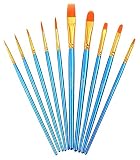
You might find as much enjoyment in creating pictures as Grandma did, and maybe uncover a talent! But you need some art supplies. Start by buying your brushes, then go on to get some canvas and paints. Once supplied, let your creativity loose! Art Advantage Brush Set t Oil/Acrylic 24pc Buy this set of a wide variety of brushes and get started painting your own masterpieces. I like the different styles of bristles that help a painter to get the effect wanted from the paints. Experimenting with each one, with the help of youtube videos, is an easy way to improve technique quickly. Try your own painting:
Whether pursuing your creative impulses or your career, taking tips from Grandma Moses’ life story could aid your own tale of success. Here is a list of things to consider for yourself.
A commemorative stamp was issued in her honor in 1969
A commemorative stamp was issued in her honor in 1969
Grandma Moses made the best of her opportunities and did not complain
She showed entrepreneurial spirit and grasped her opportunities to use her talents
She remained cheerful and showed gratefulness for those in her life
She was diligent, industrious, and frugal -lessons she learned early in life
She remained true to herself and her sense of what she liked and valued
She took pride in her work
Making Apple Butter -1958
Grandma Moses in the 21st Century – Learn more about the art of Grandma Moses
A fascinating look into the art of Grandma Moses with commentary on style and significance, with many illustrative color plates.
An Artist’s View
Grandma Moses: in the 21st Century What sets apart a naive painting that is considered fine art from just any old painting someone might make? That is an interesting question. This book of commentary, plus examples of Grandma Moses’ paintings, provides an education. And answers that question! Buy Now
Seth Godin and His Great Ideas
Connect some of his insights to the driving forces in the art and entrepreneurship of Anna Mary Robertson Moses.
” …. many of us fear too much momentum. We look at a project launch or a job or another new commitment as something that might get out of control.
…
Deep down, this potential for an overwhelming response alerts the lizard brain and we hold back. We’re afraid of being part of something that feels like it might be too big for us.
Hint: it probably isn’t.”
-wisdom from Seth Godin
Yankee Character – Grit, Determination, and Thrift
Open your eyes to what can be done, don’t focus on what can’t.
Positive Character Qualities Examined
Seth Godin’s Thoughts on Success and Grandma Moses
She illustrates his lessons for success
Seth Godin wrote a summary of the hierarchy of success.
How did Grandma Moses illustrate his 6 points?
Pointing out that the six points are often taken out of order, Seth gives the sequence this way:
1. Attitude
2. Approach
3. Goals
4. Strategy
5. Tactics
6. Execution
What can Grandma teach you about success in business?
She can teach you a lot about attitude. Grandma Moses had a “can do” attitude that made the best of things and didn’t waste time moping about disappointments. She continually put that attitude to work for herself when moving to different parts of the country, raising her family, and becoming a great success in the hardboiled world of art. She looked at the bright side of her opportunities. Grandma’s approach to her work was pragmatic. She was practical and she had a good grasp of what she could capitalize on. Long before her art career, she looked around her community and turned her dissatisfaction with the quality of the local butter into a home industry that made it better. Her style was to find a way to meet a need with her arsenal of talents and go to work producing something that gave her pride to produce. Her goals were simple and true to her values. Grandma didn’t aim to become a great artist, she was not trying to become a V.I.P. Those were side benefits to her goals of making the most of her time and talents and keeping busy. She took advantage of opportunities to supplement her family’s income, obviously viewing herself as a valued partner in building her family and contributing to those around her. Grandma Moses had a flexible strategy to use what was at hand and make the best of it. She decided to paint, in her own words, when it seemed easier to paint a picture to give to her mailman then to “slave over a hot stove to bake a cake”. One of her early works was a painting she did on a fireboard for her parlor after running out of wallpaper which she would have liked to use to cover it.
“If I didn’t start painting, I would have raised chickens.“
Grandma remained true to her values
Grandma’s tactics were geared to being faithful to expectations, and true to her Yankee values. When promising a specific number of paintings and finding she was one short, Grandma Moses simply divided a larger painting in half. She valued her promise to the buyer higher than her estimation of her production…even if the work was her own created art. Maybe that seems like a misplaced value and a destructive tactic, but it exemplifies her view of doing the best with what she had and fulfilling the needs of a customer. Her life dictated the execution of her art. She had lived through the early times of America’s most optimistic sense of where it was going, a hardworking, frugal, entrepreneurial America. Executing her work in just that spirit, the spirit of the age in which she had lived.
She worked hard, and produced many paintings, through time she saw her work produced in many transformations: from fabric to greeting cards. Grandma agreed to have her works disseminated throughout everyday America, just like you would expect from an icon of the American housewife of a time gone by, one of our “Grandmas”.
Illustration of Grandma Moses painting at her table
Picture This – A Success Story
Make Your Own…
Get some paints and paper, set aside time to let your imagination soar with your idea of art.
“Let Me Help” by Grandma Moses
‘Let Me Help’ painted in 1944
A Cover Girl
Life Magazine cover 1960
Time Magazine cover 1953
More Lessons in Success
One of the reasons Grandma Moses became so famous and successful as an artist was that her optimism and portrayal of the sunny side of life was just what the nation needed after the trials of a Depression and World War. She was a magnifier of all that Americans wanted to remember of what was good in life and about themselves.
Never underestimate the power and attraction of an optimistic and intrepid view of life. People instinctively know they need such encouragement and gravitate towards those who honestly exemplify it.
Grandma Moses Stories – in her own words
Grandma Moses Early Days
Grandma’s Opinion About Life
Painting’s not important. The important thing is keeping busy.
Checkered House, 1955
What She Had To Say About Her Life
In her own words, observations on life and memories of the American past create depth in our picture of this legendary woman and her accomplishments.
Grandma Moses Quotations:
Born “back in the green meadows and wild woods on a farm in Washington County. Those were my happy days, free from care or worry, helping Mother, rocking sister’s cradle, taking sewing lessons, from Mother, sporting with my brothers, making rafts to float over the mill pond, roaming the wild woods, gathering flowers, and building air castles.”
“Once Grandma Robertson came, and she brought some tissue paper, green and pink and those colors. Oh, I was rich when I got that! Grandma was a wonderful good woman bringing me that!”
“When I went to school, the teacher would give us maps to draw, and I would make the mountains in my own way. The teacher liked them, and would ask if he might keep them.”
Her view on her marriage, believing “that we were a team and I had to do as much as my husband did, not like some girls, when they sit down, and then somebody has to throw sugar at them.”
“I have written my life in small sketches, a little today, a little yesterday…I look back on my life a good day’s work, it was done and I feel satisfied with it. I made the best out of what life offered.”
“What a strange thing is memory, and hope; one looks backward, the other forward; one is of today, other of tomorrow. Memory is history recorded in our brain, memory is a painter, it paints pictures of the past and of the day.”
America in Bygone Times – Grandma pictured it affectionately
That is a Fine Turkey
“She wrote, “Why do we think we must have turkey for Thanksgiven (sic). Just becaus our Forefathers did, they had it because turkeys were plentyfull, and they did not have other kinds of meat, now we have abundance of other kinds of luxuries, Poor Turkey, He has but one life to give this country.”
American Themes Of Hard Work, Simpler Times
Themes In Her Art
“Turkeys”, a Grandma Moses painting from 1958 when the artist was in her 98th year.
Thanksgiving was a holiday unique to American history, captured within her paintings with the subject of “Catching The Turkey”.
Few people now understand that a successful hunter and farmer meant thriving during the challenging conditions of 19th century America. Her paintings of the past caught the once common experience to go “from farm to table” all in one’s own backyard. It was full of the simple pleasures during those times. It was not all hard work!
In Grandma Moses time, people looked back sentimentally to a rural simplicity full of hard work, but deserved rewards. Celebrations of the character of American ingenuity and self-reliance.
This was perhaps the golden age of American agricultural communities and small towns.
For Grandma Moses, life was indeed a satisfying one, full of the fruits of “keeping busy”, building a home, a family, and her business, whether it was selling apples, butter or artwork.
Old Time Quilting Bee
The Quilting Bee: “I tried that interior but did not like it, so I erased it,” she noted on one occasion. “That don’t seem to be in my line. I like to paint something that leads me on and on into the unknown, something that I want to see away on beyond. Well, maybe I try again.”
Maybe you can. Today there are so many opportunities to have your artwork noticed. An easy way to market and sell your art is Zazzle, or Etsy -if you want to sell the original pieces.
Who knows? You might become a great commercial success! Like Grandma Moses did.
Create Your Own Art Business
Want to start creating something at Zazzle? It is easy, open an account on their site, for free. Go there to start creating and selling your art on loads of products.
Botanical art is related to science, dissecting the parts of plants and accurately depicting them, but there are superb artists who have created more than merely an illustration of a plant or flower…. they have made pictures that we love to look at with beautiful colors and renderings that go far beyond the relay of mere information.
Albrecht Dürer
Botanical art by Albrecht Durer
The Marriage of Botany and Art
botanical art example
Whether you wish to teach yourself to draw beautiful botanical art or collect some wall art, or maybe just while away some time gazing at the artistic artistry, this page offers you a focus on some of the fine points of some great botanical art.
Understand Botanical Art
What is the difference between botanical art and illustration?
Botanical art is found between the overlapping fields of floral fine art and botanical illustration. Focusing on plant material, the purpose of the art is what differentiates the definition.
Botanical illustration is within the broader scope of natural science illustration. In this, science is the primary goal and the art is secondary. A botanical illustrator works with botanists or has botanical training.
Some of the earliest examples of botanical art may be seen on the walls of Egyptian tombs and temples. As the discipline of medicine grew, so did the need to properly identify medicinal plants. Many early botanical illustrations were for this purpose.
James Audubon
James Audubon also painted flowers and plants, along with his birds.
Picture is a detail of William Clark’s painting published in a book of 1833.
Botanical Art Is Still Blooming
The pictures are beautiful.
They are affordable.
Botanical art melds well with many styles.
pepper plant botanical illustration
Elizabeth Blackwell
Elizabeth Blackwell portrait circa 1737
Some of My Favorite Botanical Artists
They are all women artists
Elizabeth Blackwell was one of the best botanical artists, and her work looks fresh and lovely today.
Elizabeth Blackwell, born in 1707, was a Scottish botanical illustrator who produced the work ‘A Curious Herbal’. Her life must have been one of difficulty: marrying Alexander, who was trained as a physician, they were forced to leave Scotland after charges that he was not properly trained to practice. On to London, where he ended up in debtors prison after trying to flout strict guild rules in his new profession of running a print shop. Elizabeth’s work on her herbal helped pay off the debts. He then left for Sweden -leaving his family behind, where he was executed. Elizabeth died about 11 years later.
She produced botanical art for which she is known today.
Emma Homan Thayer, born in 1842, wrote and illustrated books on the native wild flowers of the western USA.
Jane Webb Loudon was born in 1807 in England. She became an orphan at seventeen, and began writing to support herself. She married landscape gardener and writer John Loudon and assisted him in his horticultural writing. Soon she wrote her own book of Instructions in Gardening for Ladies, which became hugely popular. Her husband later died leaving her with much debt, so she continued writing to support herself and her daughter.
Look at her fine and lovely prints, available for your own home, if you wish.
Elizabeth Twining was born into the wealthy tea merchant family (which still sells excellent teas today) in London in 1805. She was an artist and writer of botanical books, and was also a notable philanthropist. Sometimes I wonder if a love for flowers and a kindness towards people might not be part of one another in a persons character.
I love sending notecards with botanical paintings – they strike just the right tone for any type of expression. this set is particularly nice.
Curtis Ferns II by Samuel Curtis
Samuel Curtis, born in 1779, published ‘The Beauties of Flora’ and is considered the father of of all the botanical and gardening magazines that exist today.
Ferns
Robert Furber, born in 1674, was a British horticulturalist who was known as the first seed catalog creator. So when you are thoughtfully perusing all those seed catalogs each winter, this is the man to thank. Furber’s most notable work was Twelve Months of Flowers, published in 1730.
Poster style Botanical art by Robert Furber
Clear, realistic drawings of plants became necessary with the development of herbal medicines
— Patricia Kernan and Diane Bouchier
Botanical painting by Mattheaus Platearius
Illustration from the Book of Simple Medicines by Mattheaus Platearius, the importance of correctly illustrating medicines, the “simples” of the day, resulted in some very beautiful renderings that have been put together by another artist.
woodblock illustration
Jean-Pierre Barillet-Deschamps
Jean-Pierre Barillet-Deschamps painting of Pansies
Pierre Joseph Redouté
Redouté Les Roses
Pierre Joseph Redouté – He painted more than those famous roses…
Redouté went from working for Marie-Antoinette to the patronage of Josephine Bonaparte in the new regime after the French Revolution.
His father and grandfather were painters, and he was a botanist as well as an artist, although not formally educated.
A small set of examples to overview Redouté’s botanical art.
Redouté painting
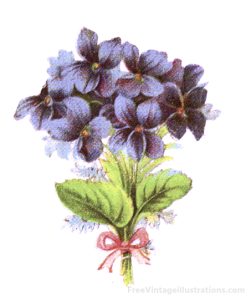
Redouté painting of violas
During the Age of Discovery, as explorers traveled throughout the world for the monarchs of Europe, plant discovery and collection became very important. Botanical illustrations recorded the new plant discoveries and there was a blossoming of publications catering to the desire of wealthy patrons to own paintings of the plants and flowers from the edges of the earth.
Vintage botanical illustration of tomatoes
Beautiful Wall Art
Botanical prints have been very popular for wall art. They have a continuation of style that makes them good for grouping, and the look of a single blossom or carefully chosen bouquet along with decorative script writing is attractive to modern eyes.
Mary Grierson In 1960 a woman applied for the post of exhibitions officer at the Royal Botanic Gardens at Kew. She did not get the job, but was able to show her interviewers her portfolio of flower paintings, and was engaged instead as an artist in the herbarium.
Watercolor Flower Artist
One of my newest favorite artists is Tracy Hall. You can see her watercolors on her blog– she is most famous for her animal portraiture, but is equally adept at capturing birds and plants.
Anyway, it is she that recommended this book on watercolor technique especially in painting flowers. (And do check out Tracy’s blog)
Complete breakdown of the process of making fine art botanical illustrations.
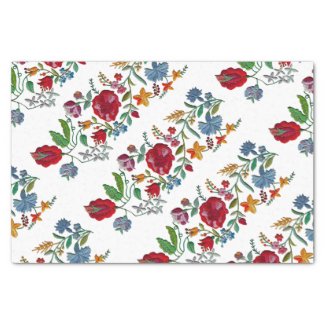
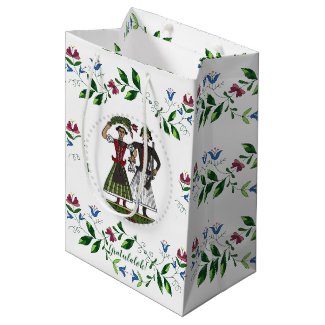
Bring together some vintage Hungarian decorative arts for a unique gift bag combination. Recently, a savvy customer combined tissue paper printed with a traditional embroidery design with a gift bag of another design.
Artwork from an old woodcut pictured a Magyar couple, which I colored in traditional colors after researching similar folk costumes was used to create the gift bag. The tissue paper and gift bag made a unique and memorable combination.
Known for their love of decoration and color, Hungarian are traditionally renowned for the exquisite embroidery they have produced for centuries. This is still in demand toady, although machine made items are most likely the ones for sale here in the USA. It is still possible to get handmade examples, however. The tissue paper has a vintage floral that is representative of the Kalocsa region. Interestingly, the regions of Hungary each have their own style and colors of embroidery, although each is clearly Hungarian! For a look at the different styles check out this overview (filled with colorful examples of Magyar needle arts!)
The tissue paper is printed with the colors and motifs found in Kalocsa Embroidery. this is presently the most popular of all the regional designs.
Weddings and Anniversaries
The wedding couple, with the motto “congratulations”, make the gift bag perfect for wedding or anniversary gifts. The bright cheerful colors speak of happiness and celebration- something Hungarians are always ready for!
This example of combining two different, but harmonious, designs together represents how unique and memorable just a few details can become. Extend this idea to invitations or party details if you are planning to hostess such an event.
Pastels, brushes, markers… so much to choose from!
Maybe you are like me, or maybe this sounds like someone on your gift list :
One of the hardest things for me to come through on has been the promise I made to myself a number of years ago:
I determined I would once again create art.
Instead, it seems that all my time is spent writing, or cleaning house, or doing a hundred other things. I love writing about gardening, writing about art, writing about computer related things… but there is something about sitting down with some fresh art supplies and creating something with that media that is calming, restoring, and satisfying.
For a few years I have been collecting art supplies.
Here are is a collection of those I most want, if I don’t already have them.
Watch my additions, soon I will write about what I want to do with the paints, pencils, papers, etc.
This might be the ultimate procrastinator’s tale…. however, let this lens function as my wish list for art supplies, as well as my record of whether I actually follow through on the dream.
Perhaps you have helpful hints that will motivate and inspire me to stop only writing about it and actually create a brick and mortar oeuvre. Just note them in the comments, and all of us artist wannabees will be grateful.
(Oh yes, included in this post are examples of inspiring art that is fun to look at, AND a number of informative videos.)
For presents, either birthday or Christmas, art supplies might be the perfect choice. Artistic people seem to constantly need resupplying.
Top Choices?
paper
sketching supplies
water soluble supplies
pans and palettes
Know your artist: that is the best bet for choosing presents well.
Little Rembrandts
Children benefit from all the things that encourage them to be creative. Basics are welcome. School supply lists can give you ideas, too.
Artist Paper – that stands up to water
For watercolor or pen and inks, a paper that is strong enough to handle the water and hold its surface texture.
Pen Techniques and Supply Suggestions
Know Your Papers
Sketch pads are usually made for dry utensils like pencil or charcoal, but the intended use is listed on the description that is found on the front. when giving a gift for an artist, and you aren’t sure which is their favorite medium, use one that is suitable for a broad range. Stillman & Birn Delta Wirebound Sketchbook, Heavyweight 180lb, Ivory White, 25 Sheets, 7×7
Gorgeous heavyweight paper. archival quality multi-media paper. This is top of my own personal wishlist.
Your Talent
If you have a talent, use it in every which way possible. Don’t hoard it. Don’t dole it out like a miser. Spend it lavishly like a millionaire intent on going broke. – Brendan Francis
Pen nib photo by Charlotte L
Pen And Ink
Pen and ink was my forte in drawing. Working with it, alone and with watercolors, was the way I best expressed the art that resided in my mind. Later in life, encouraging my children to learn calligraphy meant giving up ownership to my pens. And while I do not regret that, since some of my girls developed real skills in calligraphic writing, I now find a desire for the high quality pens and inks that give the best results.
So guess what supplies are now high on my list? Yes, quill pens and inks.
I Love To Draw With Pen and Ink
I let my children have all my pens…. now, what about me?
Supplies For Pen And Ink Artists
Winsor and Newton India ink
Speedball Standard Point Dip Pen and Nibs
Faber-Castell Pitt Artist’s Pens
Strathmore Bristol Vellum Paper Pad
Pens and Watercolor Wash
What’s On The Artist Gift List?
This is the short list for gifts that I would be personally happy to receive, make your own for you or someone you know.
An adult Artist who loves watercolors and pen and ink. Also draws sketches with pencils.
Paper for pencil, also for watercolor work.
Derwent pencil set
Kneaded eraser
Winsor & Newton or Rembrandt watercolors
Art Gifts For Children
If I were buying a selection of child art supplies I would start out with a large sketchpad of drawing paper, a beginners set of pencils, including a gum eraser. Then I would add a small set of watercolors with some extra brushes (you always need more than one brush!), and a set of good markers.
Did you know that Mary Engelbreit started out with just markers to make her wonderful drawings? And look where she ended up- an Empire and a Career.
An Artist Easel
I like desk easels the best, but any easel helps to hold the paper and paints while working.
Delightful start to getting ready to draw or paint, and easel keeps you art ready to work on, and provides the perfect space to keep your utensils handy.
Use It Or Lose It Is The Rule For Your Talents
If you (or giftee) are just starting out, be sure to check out the tutorial videos and the lists here. Slowly build your stock of supplies, but try to give free rein to your creativity.
There are times we waste by not using our paints. Let yourself liberally use the paint and papers, the pencils, the inks… don’t let them sit and languish.
For Those Who Paint
Each medium has its own set of techniques , brushes, and painting supplies. Which artist are you buying a gift for this year?
Yes, I want the WHOLE set of these fine watercolor pencils. I want to be able to take my watercolors wherever I go, and this will be perfect.
These work wonderfully for the new adult coloring books that are now available everywhere. Consider gifting someone with one of these pencil sets and a beautiful, intricately drawn coloring book.
Try Your Hand At Coloring
Here’s the how- to if you ever wondered why someone would love to sit and color.
Gift Ideas for Artists – Get your gift-giving creative juices flowing
There are many gifts that will make your artist happy! That is one of the things that makes this so much fun. It is easy to shop for artists when you don’t know what styles they prefer because you are supplying them with something they always need, will actually use, and they can create their own style.
When someone has been practiced in their craft, it does make sense to give quality supplies. You wouldn’t believe what a difference a well made paper or pigment produces in a finished piece.
Art Papers are always welcome
There are many types of papers for artists, but a basic sketchbook is always welcome. A good quality paper that will take a number of media is probably the best choice.
There are differing weights, whether they are suitable for wet medium (like watercolors), and differing component materials ( cotton, wood pulp, etc).
Luckily, most list on the cover or label which medium they are useful for, eliminating guesswork.
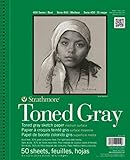
Please, please, I wish for this gray toned paper sketchbook by Strathmore. It will be the perfect paper for pro look sketches that pop from the page. Super inspirational for an artist.
Save and Display Your Child’s Art
Display case is such a cool gift idea
My daughter-in-law uses this for displaying my grandchild’s masterpieces. It is a beautiful frame- such a great idea!
Children’s Gifts, And Those for Moms
Giving children art supplies of some sort is almost always welcome. Level of interest makes the sorting out of whether we get coloring books, markers and crayons, or oil paints, brushes, and canvas.
For moms- ways to organize and display the resulting art sparks many ideas for appropriate presents.
a wall-hung case
a metal wire with clips (I saw this idea at Ikea)
decorative magnets strong enough to hold artwork onto frig or magnetic board
Brushes and Pens
If you know that the artist on your gift list paints in a certain medium or loves to create pen and ink drawings (Zentangle, anyone?), then gifting a great set of brushes or new pen nibs or inks is a very thoughtful thing to give.
Good quality is always appreciated, and to be considered much more than quantity. In other words, one bottle of excellent quality ink is better chosen than five bottles of less expensive, and thus less dependable inks.
This is why it pays ot now a little about the person. Young artists who are beginning to experiment might be the exception to this rule.
Why?
Beginners should feel free to use the supplies and not worry about mistakes. That is why pads of paper are always welcome, too. Plenty of room to practice and perfect their art. This is th ecase in which a gift of less expensive quality, but greater quantities are welcome.
This video will explain it all for you. Very helpful if you are faced with an array of choices and aren’t sure which to choose.
Are You an Artist? – What do you use?
What is your medium of choice?
pen and ink
watercolors
acrylic paints
oil paints
clay sculpture
graphic computer art
pencil sketching
oil pastels
charcoal
markers
collage findings
Another gift idea besides the art supplies would be lessons, either with a teacher or online. So many courses are available that are fun and easy. My son loved taking a class with others that resulted in an easy to accomplish oil painting to take home. Look for these which are often offered locally.
My Daughter Uses Mine, The Wacom Drawing Tablet
This is the way I create most of my art- with graphics software and a graphic tablet. The Wacom pen tablet is on your graphics artist wishlist, believe me!
Computer Graphics
Not all artists use hardcopy paper. Increasingly there are very fine pictures produced with software graphics.
When it is time to invest in something like a pen tablet, it may be out of budget for a young artists, particularly if they are trying to improve the quality of their chosen software. Buying Adobe Photoshop or other Creative programs leaves little room for the peripherals.
That is why this may be one of the best choices, if you know they have it on their wishlist. Wacom makes several types according to the output desired. Art, Photo, Comic?
Artist Drawing Board – When it is fun to go back to the drawing board!
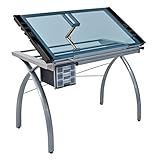
Wow, someone is so lucky and going to be so happy this year when they go back to the drawing board. Especially a sleek high style one like this.
I have a cheap drawing board, but this is the one I really want. It is a beautiful piece of furniture that really WORKS for an artist.
How Many of You Are Like Me?
Do you have talents you let go dormant?
I have talents, but I don’t have time
I have talents, but don’t have supplies and tools (or instruments)
I am unsure if I have talents
I secretly believe I have a talent, but I am afraid I will fail
I have been pursuing and developing my talents
I’ll think about this another day
Wherever you are on the spectrum, think about going into the coming year armed with all the supplies you need to accomplish your artistic dreams. Or help make that happen for the artist on your list.
If I were buying a gift for an artist that primarily created in pen and ink, watercolor, or colored pencils, I would choose a large kit.
A younger artist still experimenting with what they like, or someone who primarily works in sculpture, collage, or oil painting, would probably appreciate a smaller kit. Just see whether they liked the medium before investing lots of money in it.
An Ingenious Paint Accessory, the Masterson Sta-Wet Palette
I want one now. I have canvases, I have acrylics. I used to paint with tempera and watercolors, and occasionally oil paints, but have never actually used acrylic paints very much. I think it would suit me best to work with them… and I love the description of the palette. My own method for keeping paints usable is to cover them with Saran wrap, but this is far superior for the purpose!
Sta-Wet Palette Keeps Paints Fresh For Days With Airtight Lid.
Pressed Flowers Can Make Pictures
I’ve always admired Penny Black’s pressed flower art, so I could start making my own supplies for that, couldn’t I? Unusual maybe, but if an artist likes to use mixed media, and often incorporates natural elements into their work, a flower press, along with an inspirational book of ideas could be an inspiring and welcome gift.
Art supplies are not only pens and pencils, or paints, brushes, and papers, they might also be such things as pressed flowers or found objects. Creating collage is one pursuit that many have found relaxing and expressive.
When I read Penny Black’s book on pressed flower pictures, it really opened my eyes to the possibilities of using such materials in creating art. Simpler uses make wonderful crafts for cards, too. Bits and bobs of buttons and lace are well known to scrapbookers for the way a collage can be created with the most ordinary of throwaway objects. We just have to use our imagination!
The first virtue of a painting is that it be a feast for the eyes. -Eugene Delacroix
My family also uses Amazon Prime often, which saves us money on shipping and more.
Please support my site by using my links, thank you. This Page may contain affiliate links. “As an Amazon Associate I earn from qualifying purchases”


 Franz Liszt: The Final Years, 1861-86 v. 3, 1861-1886. Cornell, 1996 v.3 p.169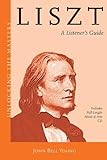



 A rare look at her needlework art