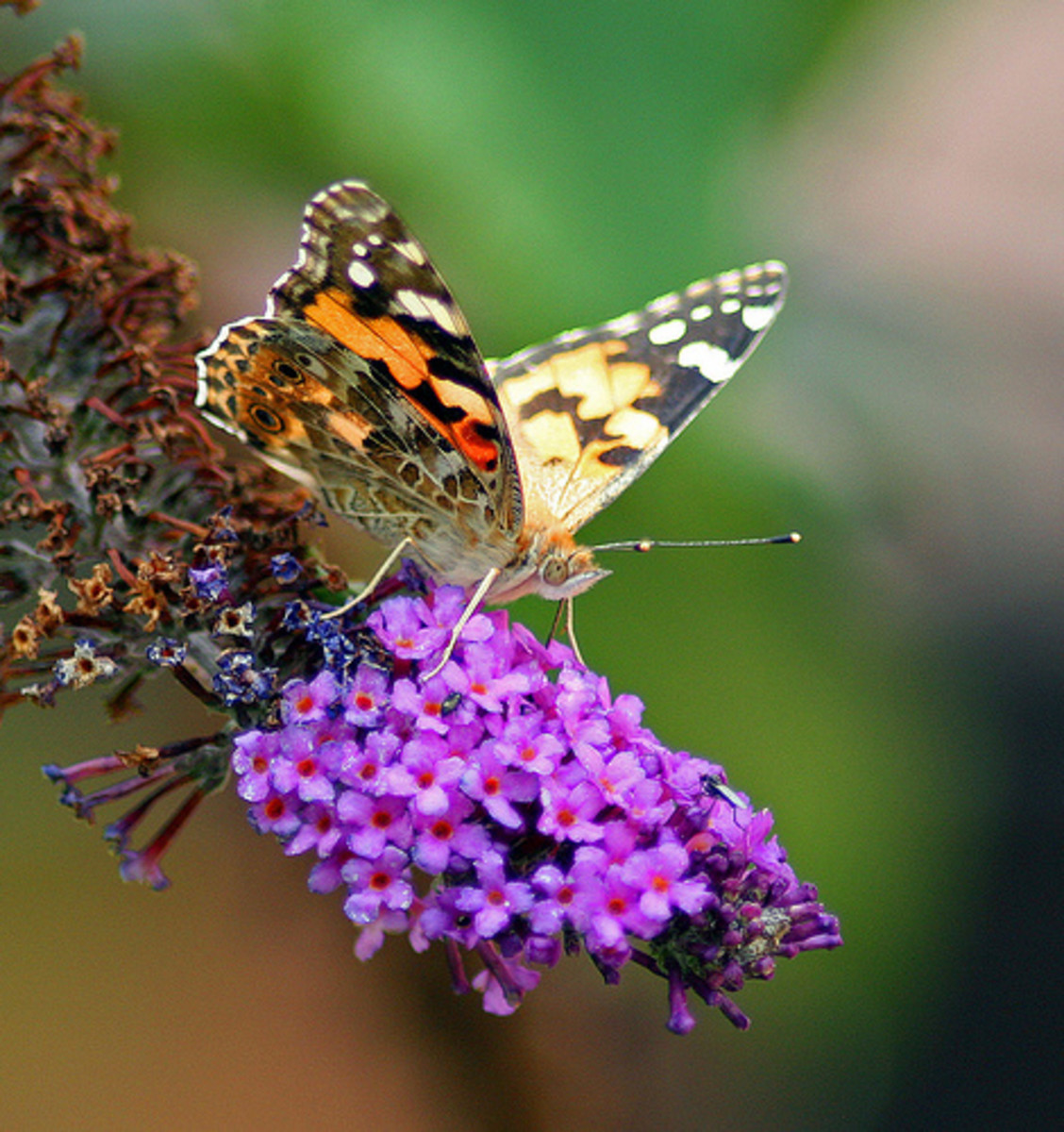
Painted Lady butterfly on Butterfly bush bloom (Buddleia). Bring Lepidoptera into your garden.
For so many years, our family loved going on trips to the Franklin Park Conservatory in Columbus Ohio. It has improved its exhibitions through the years and added what is now an all-time favorite: the “Blooms and Butterflies” event.
Dreamworld of Exotic Butterflies
In a Pacific Rainforest
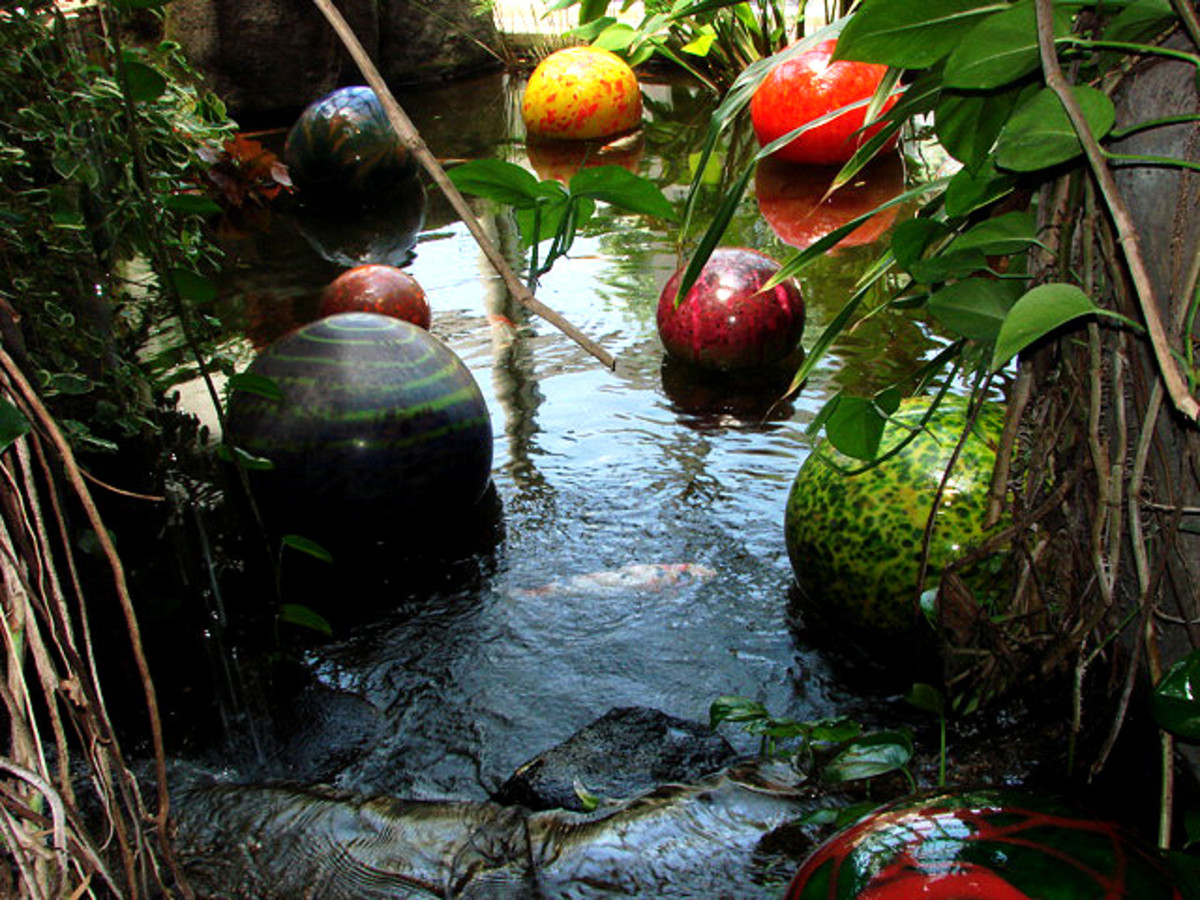
Entering a lush tropical rain forest, the air heavy with mist, the stream sparkles before me. It runs in a rivulet before becoming lost in the tangle of orchids, glossy green leaves, and the towering overhang of Pacific rainforest trees.
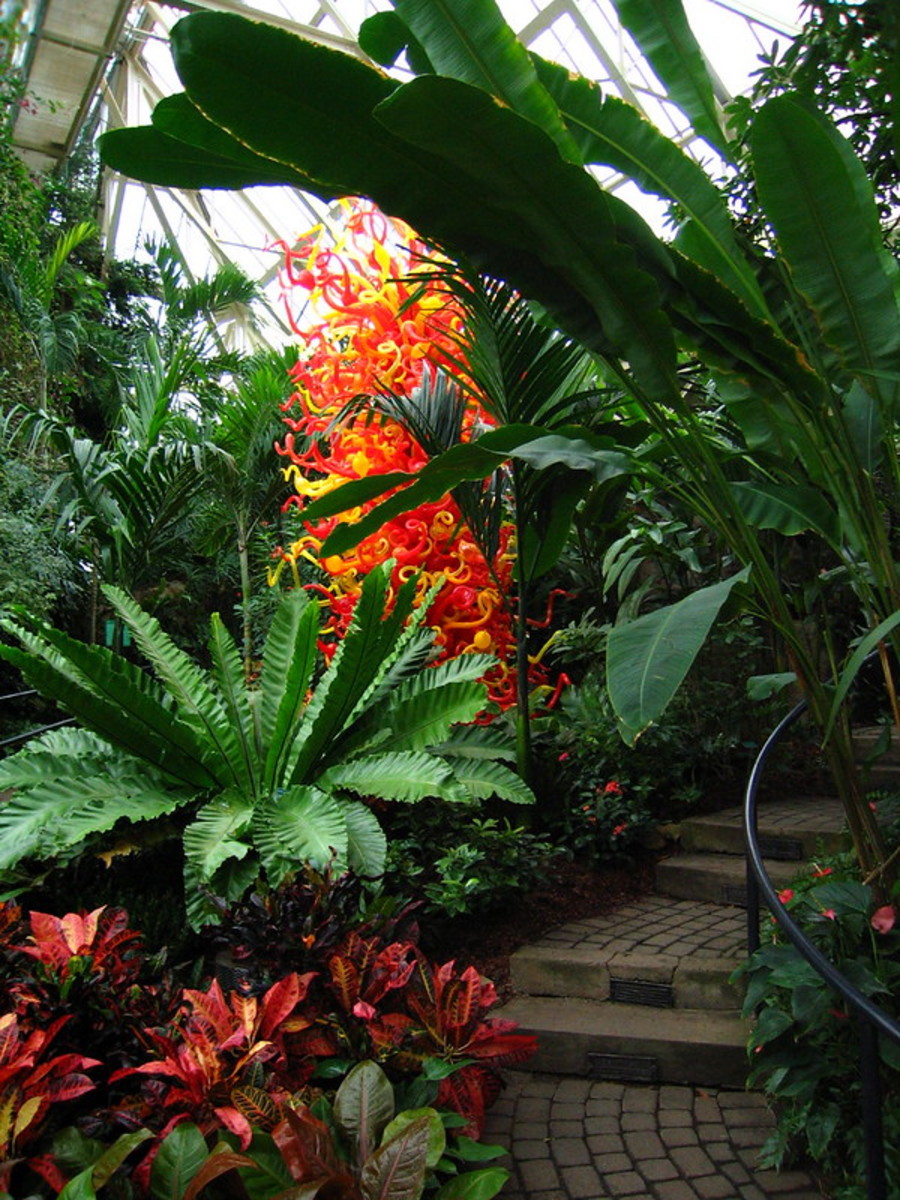
Directly ahead, a stairway leads into the path that curves away from view, so that I notice the richly colored blooms that screen it and stop to gaze at their perfect forms.
Following the turn, a fantastical sight of twisting turrets in yellow, streaked with red, burst upon my eye. A sculpture, made entirely of glass by the most alive imagination, is fully discovered before me. All of a sudden, a cloud of butterflies, all colors, of different sizes, in the most jewel-like shimmering hues, fly around me; and one, most delicate, alights upon my startled hand to bid me welcome.
Have I happened into Paradise?
No, but I am visiting one of the most enchanting exhibits of live butterflies and tropical plantings of the Pacific Island Water Garden inside the Franklin Park Conservatory.
Where am I?
In the middle of the most wonderful experiences for both adults and children, the Conservatory’s annual “Blooms and Butterflies” event which lasts from March 10 – September 3, 2012 in Columbus, Ohio.
Who can resist this treat of living artwork flying among the equally entrancing art of Chihuly showcased among the exotic foliage and blooms of the Pacific rain forests? Let’s explore this dreamworld butterfly exhibit at the Franklin Park Conservatory with art and real, live butterflies, among the exotic flowers and plants.
Blooms and Butterflies Captured
About the “Blooms and Butterflies” Event
To enjoy more of these delicate creatures …find out about them
Newly emerged butterflies are released into the Pacific Island Water Garden at 1 p.m. and 3 p.m. and Conservatory staff member will provide a short talk; this is a great opportunity to find out more facts than you might otherwise pick up from the exhibit itself.
Many species are tropical butterflies,from South America, Africa and the Caribbean, that most of us would not get a chance to see flying through the air. Some I remember seeing are the Paperkite, the Morpho, Orange Julia, and Glasswings. With 100 species represented, it is a field day for butterflies.
100 butterfly species in the Blooms and Butterflies
During the summer months, starting in June, emerging monarchs are released daily at 3 p.m. into the outside pollinators garden area.
Available inside the gift shop and greenhouse are Ohio native Painted Lady caterpillars to take home and observe the metamorphosis first hand. A wonderful way to extend the experience of the world of butterflies.
The Pacific Garden
Within the Conservatory are many climate zones, after seeing the butterflies in the Pacific garden, visit the rest. <
Learn More About Butterflies
Fun Lepidoptera Facts
https://youtube.com/watch?v=5yAoZ446j8U%3F
Butterfly Trivia
Facts like this…
Lifecycle of the Lepidoptera has four parts:
egg
larva (caterpillars)
pupa (chrysalis)
adult
Butterfly taste receptors are on their feet.
There are between 15,000 and 20,000 different species of butterfly.
They range in size from the very small 1/8 inch to almost 12 inches.
Butterflies see red, green, and yellow.
Top butterfly flight speed? 12 miles per hour.
If you would like to know more about butterflies through observing them, buy live caterpillars and follow directions helping them to cycle through their stages. Release the butterflies into your yard.
From The Common To The Exotic
Alighting on Lantana blooms
Indoor Rainforest and Glass Sculptures
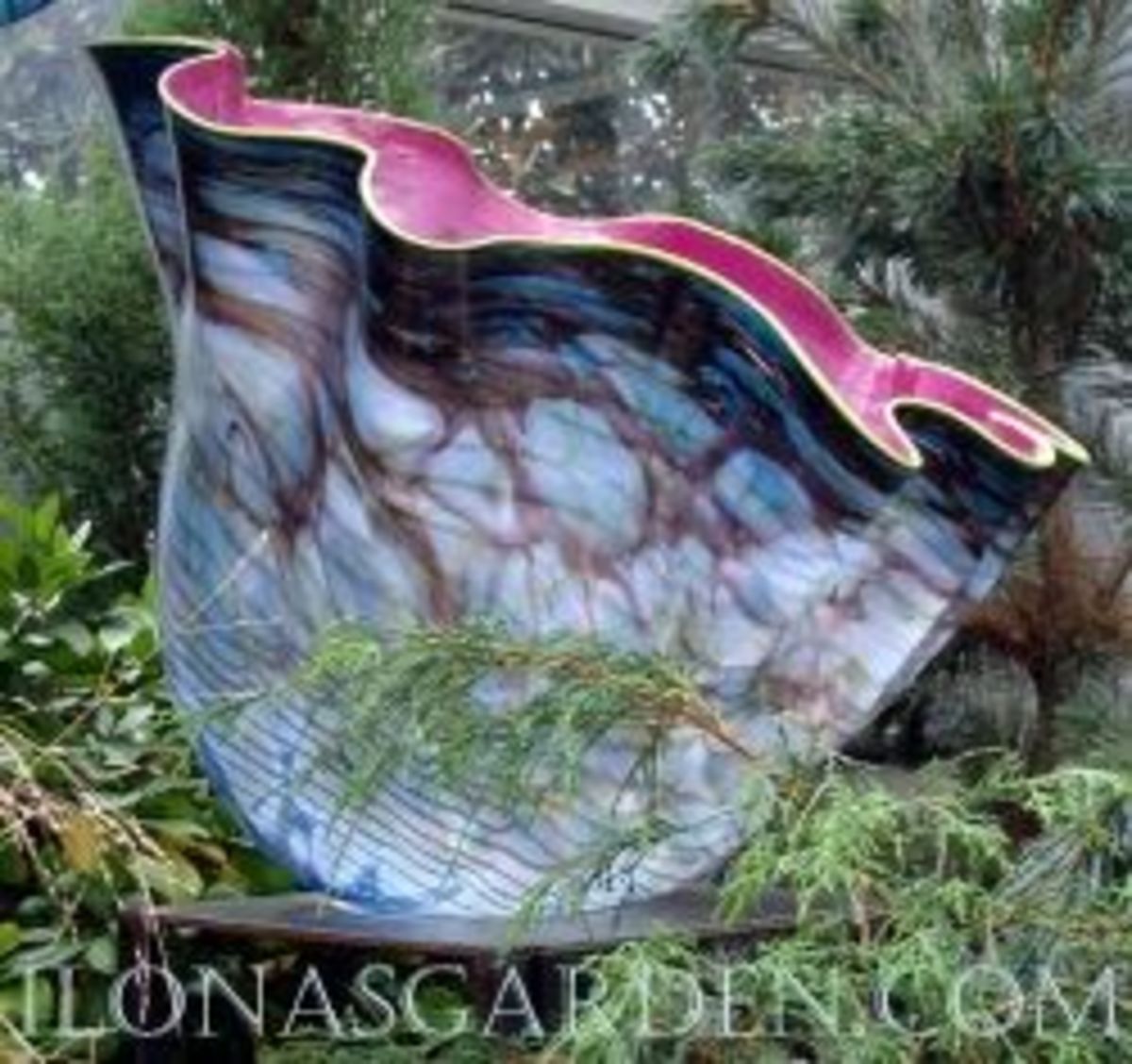
Chihuly glass sculptures made the perfect counterpoint to the bright movement of the butterflies
Pacific Island Water Garden
Where the butterfly exhibition takes place each year
As one of the largest exhibits in the Franklin Park Conservatory, located in Columbus Ohio, the Pacific Island Water Garden is packed with tropical plants.
Franklin Park Conservatory opened Blooms & Butterflies in 1994; it was the first conservatory in the nation to showcase a seasonal butterfly exhibition.
Described as follows,”the Pacific Island biome represents the diverse landscapes found on a volcanically formed island, dotted with tall, canopy covering trees, and flowering plants”, this part of the Conservatory is like a forest with all your favorite houseplants in giant size with many water features to enjoy.
This is the perfect place to discover the butterflies of the tropics- full of green foliage, flowers that rival the colorful butterflies and water features that create a little part of a paradise to explore. The art of Chihuly just adds the finishing flourish to a perfectly beautiful garden.
Visit in 2025
Blooms & Butterflies
Blooms & Butterflies opened 02-22-2025
closes 07-06-2025
Features In Franklin Park Conservatory
While the Butterfly exhibit is situated within the Pacific Tropical garden, there are other climate zone gardens in the conservatory building as well as a park outside.
A fun giftshop and cafe are also a part of the many parts of this botanical garden.
It is a beautiful venue for weddings, as my daughter’s wedding proved. We have pictures of what I felt was the most perfect marriage ceremony I’ve attended.
One of the fascinating events in the Butterfly exhibition is watching the full grown butterflies emerging from their chrysalis cocoons. Every day they emerge, dry their wings, and become ready to fly within the enclosure of the biodome of the cloud forest. https://youtube.com/watch?v=R6MUzhjljxI%3F
Make a Butterfly Garden
In your own yard you can make a butterfly destination paradise. Learn how to attract butterflies.
Flitting and Fluttering
https://youtube.com/watch?v=0YuUso0VmPg%3F
Art At The Conservatory
Glass Artist Featured in the Gardens
A little about the artist:
Dale Chihuly was introduced to glass while studying interior design at the University of Washington. He went to work at the Venini glass factory in Venice, later in his career he was honored with a solo exhibition, ‘Dale Chihuly objets de verre’, at the Musee des Arts Decoratifs, Palais du Louvre, in Paris. Besides his magnificent contribution to the world of art glass, he has worked as a teacher and mentor to many students of the art. He has also worked as a performance artist.
The Chihuly Resource Center in Franklin Park Conservatory is open during the following hours and by appointment: Wednesday, Friday, Saturday and Sunday 11 a.m. – 4 p.m.
An Artful Rain Forest
A pathway through the Pacific Rain Forest environment.
Dale Chihuly
>The glass works of art by Chihuly are an important part of the Butterfly Exhibit, and indeed, of the entire Conservatory, year-round.
Chihuly Sculptures – Franklin Park Conservatory makes the perfect frame
Chihuly sculptures
More To See At Franklin Park
There are permanent installations of Dale Chihuly’s glass art, but in 2010 there was a festival of colorful additions. The creative force of the staff at the Conservatory are always bringing something new and fresh for visitors.
There are live glassblowing demonstrations at the Hot Shop.
Although the Live Butterfly Exhibit,Blooms & Butterflies, lasts for only the months March through September, the Chihuly sculpture collection is worth seeing at all seasons.
The Franklin Park Conservatory art glass exhibition is the largest collection of Chihuly glass owned by any conservatory or botanical garden
Whetstone Park of Roses | Home Garden Companion A perfect place for a summer evening stroll, a free concert, or a wedding. The Rose Garden at Whetstone Park is a lovely way to spend time during any season, but especially at the height of the rose bloom in June. This is a park that I have visited o
One of the most rewarding ways to learn about a whole range of subjects is to focus in on one topic and create a unit study from it.
Children love to garden
Unit studies are one of the most rewarding ways to incorporate all of the curriculum into a fun project.
This group of activities creates a break from dull workbooks and tiresome drills ( as necessary as those sometimes are). This article takes you all the way through how to plan and implement this form of curriculum to specific topics to explore.Included are convenient links to books on Amazon.
Steps To Teaching Core Subjects Through Garden Unit Studies
How-To
Plan the overall unit, write down which projects you wish to accomplish. Plan the reading for literature, with writing projects such as how to keep a journal, writing an expository essay,etc.
Make a list of books to purchase or borrow from the library. Obtain them. buy your folders or journals.Create math projects from cost lists, geometry problems from garden layouts, etc.
Make a supply list of everything you will need to do the projects and then go shopping! Scavenge around the house for everything that will be used instead of purchased. Get pots, soil, seed starting supplies, or whatever you think you will need.Add a history lesson on tools and the materials they are made from as a way to measure the advance of civilization (stone, bronze, iron) . Or compare societies that were hunters and gatherers with those who farmed. Or create a lesson on the Great Depression and the Dust Bowl.
Begin your unit study with seasonal appropriate activities, field trips, and science experiments. Surprisingly, a gardening unit study can be done at any time of the year.Use science projects on weather, soil testing, botany, etc.
Grow things!
A Garden Topic Covers Every Spectrum of Curriculum
Why is this one of my favorite group studies?
I spent a lot of time and effort in the pursuit of gardening, and have always tried to include my childrenin gaining an appreciation of nature. For their homeschool studies this included lessons in the satisfaction of working outside.
Let’s Run Through a List of Subjects
History
Language Arts
Science
Mathematics
Art
Character Development
History Outside, For Example
Gardening is one way to include indoor and outdoor pursuits. The history of gardens is so interesting that it can encompass whole eras as well as many famous people who had interests or stories somehow related to the garden.
For instance, did you know the ‘Mutiny on the Bounty’ involved the transport of breadfruit plants in the great plant exploration era of England? Or that Josephine Bonaparte had a well known rose garden?
The opportunities for garden math, horticulture, chemistry, and journaling are plentiful in the garden… come see.
Penelope Hobhouse is one of the premier garden writers in my book. she tackles the task of presenting plants throughout garden history. She will make it interesting for you, I promise.
Make a specific era your focus for art, history, and science. Find out about the gardens of that time, the plants common to them, and how they were used in the medicines and manufacture of clothing.
Make a scrapbook page of dye plants. Learn about which plants to avoid eating, or explore the history of the tomato…. where did it originate ( the New World) and what did Europeans think of it (it was feared to be poisonous)
Plant hunters and explorers- who were they and how are our gardens different today?
OR why do we have plant transport and import laws? Why are there no more American Elm or Chestnut trees in our gardens?
These are just a few of the topics to chose for your own garden unit study. HiddenStories in Plants
Plants are exciting when viewed from the perspective of the mysteries they hold, instead of a compilation of dry facts.
Let them tell their stories, and children will be intrigued.
Geography in the Garden
Where does that plant come from? China
Plants From All Over The World
Plants in our gardens are rarely native, and with a Horticultural Encyclopedia or any plant book which describes the origination of the plant (many do) it is s simple task to locate the geographical location where the plant originated.
A study of a great plant explorer like E. H. Wilson can combine fascinating history with a geography slant.
Teaching Unit Studies
One of the best ways to engage your child’s interest in learning, there are many great guides available and even the planning work of the unit study all plotted out beforehand.
Language Studies and Writing
What Type Of Writing Will You Learn?
Expository writing is the type of writing you create for term papers, essays,etc.
Narrative writing is a type of writing that requires you to tell a story that describes an event or relates a personal experience.
Persuasive writing argues a point and is often called argumentation.
All three can be used in the Garden Unit Study. Expository: Write a paper about why improving the soil is important, or a biography of a famous plant explorer. Narrative: Relate a funny or interesting thing that happened while making the garden, tell a story from a bugs point of view! Persuasive: To spray or not to spray, that is the question… choose a controversy and argue why your opinion is the right one.
Include How-To Books for Success
Roots, Shoots, Buckets & Boots: Gardening Together with Children Hands on how-to is what makes this unit study so much fun.
But how do you make learning and working in the garden seem more like fun and less like work? And how to best present gardening to children? Find your ideas in this nicely illustrated guide.
Keep Nature Journals
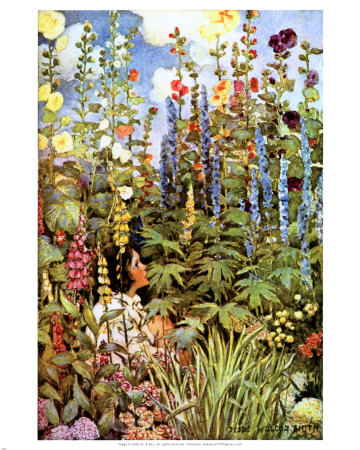
The best writing exercise for young children is a garden journal with pasted pictures of the plants and projects and words.
Garden catalogs, hardcopy or digital are a rich supply of pictures and information – just print out or cut out and paste into the journals. Seed packets can be saved and used, too.
Nature journals, garden journals, lapbooks about plants, can be worked into your homeschool curriculum and are especially useful in studying with the unit method. They are lasting items for school portfolios.
What is a “Lapbook”?
“An educational learning tool made from a folder and meant to take the place of worksheets.” AKA “shutterbooks, graphic organizers, fold books, presentation books, flap books, and project books”.
To find out more about the concept and difference between lapbooks, notebooks, and scrapbooks, “To Lapbook, Notebook, or Scrapbook– that is the question”.
Use pictures cut out from magazines on the topic of gardening and plants
Lapbooks are a system of file folders in which the student stores creative summaries of their work.
Lapbook creation is a lot like notebooking, another alternative way to keep and showcase your child’s Garden Unit Study projects and papers.
Basic Supplies for a: Lapbook
Folders (regular or legal size)
Various types of paper (construction, cardstock, index cards, etc.)
Writing tools (markers, pencils, pens, crayons)
Stickers, Rubber Stamps , Clipart -for illustration and accents
Glue
Why Bother to Create These Projects?
The beauty of such projects are the physical keepsake results of your schoolwork endeavors, and the motivation it provides for your child to see that their schoolwork matters and is not just a bunch of vain or repetitious effort.
Organize Your Lapbooks
Lap books store easily in the plastic, up-right, magazine holders on your bookshelf.
Photo from the Smithsonian lesson on “Plants and Pollinators”.
Photo by Smithsonian Beneath the garden soil and above it, it is all about the science of growing things. From botany to chemistry, there are a myriad of topical experiments and learning exercises in gardening.
Find out about the pH of the soil and test your garden soil.
What are the ingredients of common fertilizers and what do their numbers stand for? (Nitrogen, Potassum, and Potash)
How are flowers pollinated? What is the life cycle of a plant?
What about microorganisms, how important are they in soil health?
Discover more about the garden than meets the eye. Take a lens ( a real lens) out into the garden to spy on bugs, look at leaf veins, inspect pollen in flowers.
68 windowsill plants from kitchen scraps – Science fun
An easy science experiment for small children is to grow a plant from a kitchen scrap. Old carrots, potatoes, sweet potatoes… many will grow roots and sprout a plant.
Don’t Throw It, Grow It!: 68 windowsill plants from kitchen scraps by Deborah Peterson and Millicent Selsam Don’t Throw It, Grow It!: 68 windowsill plants from kitchen scraps Learn how to grow vegetables, fruits, and nuts, even herbs, spices and Asian vegetables. Lots of projects to make exciting plants from a trip to the grocery, great way to get across the lessons on how what we eat comes from the earth, not the store shelves. Humorous and informative, this book will teach you more about growing plants and have more fun doing it.
Visit public gardens like those listed in Gardens of Ohio. Many educational events are to be found!
Math by the Yard
The opportunities for math skills multiply in the garden
Example of Garden Math problems.
“Gardens are a source full of fresh fruits, vegetables, and flowers that provide for and sustain life. But did you know a garden, from its creation to harvest, is rich in mathematical concepts and connections as well?” so says Gardenmath blog and gives us one very helpful post of diagrams and examples.
You can think up all sorts of ways to apply math within the garden unit study including the suggestions included here. Measurements, accounting, and ratios may all factor in the making of a garden.
by Molly Dannenmaier
A guide for parents to nurture their children’s sense of wonder and curiosity within the garden with projects and lots of information on how to give a sense of imagination and play to learning
Great book to use for one of the most exciting unit studies right in your own backyard.
The longer you garden the better the eye gets, the more tuned to how colors vibrate in different ways and what they can do to each other.
You become a scientist as well as an artist,with the lines increasingly blurred.
The Arts
The Garden and Art – Many artists depict garden subjects
1
Jean-Francois Millet
Art History
Whether you chose Millet, Renoir, or Monet, Fragonard or even Gustav Klimt, the historical time or genre can be explored as well as the gardens or garden related work depicted. An entire tour of the life of Monet, Impressionism, and the garden at Giverny yield rich discoveries within a garden unit study.
Jean-Francois Millet painted many works of people busy in the fields.
A Little Garden Music
Ketelbey: In a Monastery Garden
THE COMPOSER: Albert W. Ketelbey was born in Alma Street in the Lozells area of Birmingham, England, the son of George Ketelbey (written with no accent), and Sarah Aston. At the age of eleven he wrote a piano sonata that won praise from Edward Elgar. Ketelbey attended the Trinity College of Music in London.
The Ballet, ‘The Firebird’ has scenes in a garden.
Character Development
My Family, Hard at Work
Raking is a good team project
in the Garden – Character Building: Diligence and Teamwork
One of the lessons that a garden unit study can teach is the value of being diligent and working together as a team. This is something that will be naturally absorbed in the garden work, but can be formally instilled through underlining within the teachable moments and with written assignments geared towards thinking about these characteristics.
We used this nature character study through all grades. Interesting facts about many animals integrated with Bible studies and lessons.
Character studies book
We used this nature character study through all grades. Interesting facts about many animals integrated with Bible studies and lessons.
The Bible points to the ant as an example of diligence, and there are usually plenty of ants to observe in the garden. It is easy to perform experiments in how easy it is to get a job done when working as a team and this could also be useful for civics or social studies lessons.
Many maxims, quotes, and poems originate in the act of gardening, ever heard of “a hard row to hoe”? That makes literature and language arts easy to incorporate. Many have to do with exercising diligence and working together to create a garden. A classic book like “The Secret Garden” by Frances Hodgson Burnett is a famous one.
Diligence in following directions can be gained from the directions on the backs of seed packets. Plant a few in contrary conditions and note the difference between plantings
~ Marjorie Harris
For Little People – Children younger than 8 yrs old benefit from their own sized tools
A colorful garden tote filled with tools will give a sense of fun and play to any garden activity. Real garden tools, but in a small size useful for light garden projects for children. Use any sharp tools, such as secateurs, with care.
Garden Outfitters
For a range of ages, tools that will stand up to digging in the dirt and a handy wagon for playing or hauling garden supplies around. Radio Flyer Classic Red Wagon I had one as a kid, my children had them, and I used them in the garden. This is the classic all purpose wagon.
And after years of hard use, when the wagon rusted out from being left in open weather… my Dad scavenged the wheels and made two wheeled garden carts, one for me and one for him.
The only caveat I’ll give you is that these tough little wagons last better if they are put away when not in use (another “do as I say and not as I do” piece of advice.)
I’ve used the plastic kinds, but nothing is as good as the Radio Flyer Classic.
That is how a unit study works, taking a topic of interest and looking at it through the lens of many different academic disciplines. So one that centers on the second largest order in the insect class is bound to be interesting and fun… with new avenues of discovery to take while making learning enjoyable. It is important to remember that not every part of a study has to be rigorously followed, allow it to pique your child’s interest and finish as many of the projects in as wide a range of the subjects as possible.
Ask some questions, like “Did people so value a certain moth that it changed history?” “Why is the Morpho butterfly such a beautiful blue?” ‘What does the butterfly represent in a painting…anything?”
Who said “I float like a butterfly, sting like a bee”? Why did he say that? What other famous quotations and references to butterflies can you think of?
Put your thinking cap on and come up with a new and interesting educational journey into this unit study for a great way to inject some excitement and interest into your homeschool activities.
Take Photos
Combine botanical study with photography skills by visiting a live exhibit of butterflies, take your camera and capture the experience. As a result, a whole new area of discovery and research opens up within your unit study.
Study Lepidoptera in Science
Undoubtedly, when you pick the butterfly as your focus there are so many opportunities for taking detours into almost any academic subject of study. All age groups love these beautiful living gems of nature, discovering literature, science, and history through the pursuit of butterflies will be one of the most entertaining and possibly lasting endeavors your family may enjoy. It sure will be many projects to keep you going, maybe even use it as a theme for the year.
A Butterfly Unit Study is Simply One Choice
A central topic, like ‘butterflies’ chosen here, is used as a hub for studying math, language, history, geography, writing skills, spelling, art, and even music. You may use a Nature notebook, which your student creates, to gather all the projects together, or lapbooks for younger children to provide a lasting keepsake of their discoveries about butterflies.
Butterflies undergo ‘metamorphosis’ which makes them an analogy for the concept of change.
Butterflies and insects have their skeletons on the outside of their bodies, called the exoskeleton. This protects the insect and keeps water inside their bodies so they don’t dry out.
Science Can Take Flight
Science is often the most challenging subject for homeschool families. Using the unit study method can make all the pieces of the puzzle fall together in a natural way that invites explorations and discovery.
Butterflies Morph – which makes them a great unit study topic
Because butterflies are actual organisms, consequently finding related studies in the realm of science is an easy endeavor. Start with the Natural sciences –and go from there–
Butterfly Biology
Following these facts to start on the discovery.
Kingdom: Animalia
Phylum: Arthropoda
Class: Insecta
Order: Lepidoptera
As Arthropods, butterflies are invertebrate (without a backbone) and have jointed legs, an exoskeleton, and a segmented body. Lepidos means “scales”, ptera means “wing” in Greek, an identifying characteristic of the insects in the Lepidoptera order: their scaled wings. The order Lepidoptera has around 120,000 different species of butterflies and moths. The only larger order is that of the beetles, Coleoptera, with more than 350,000 recorded species.
Butterflies Branch Out in Horticulture, Earth Science, Physics
What about the way the human eye perceives color? Did you know that the pretty colors of the butterfly’s wings are not so much pigments as a structural effect in the way light reflects from the surface? Much like Peacock feathers. Explore ecosystems and why butterflies thrive in certain environments, make an area of the yard into a butterfly haven, begin a journal to record species of butterflies found in your yard or in parks you visit.
Whether you study artists like those of the Dutch Masters or make your own project, the possibilities are endless a
nd t
he s
tude
nt’s
appr
ecia
tion
for
many
typ
es o
f ar
t is
cul
tiva
ted.
View this painting by Adriaen Coorte, continue to study more Dutch painters who loved to include the colors and liveliness of the butterfly in their masterpieces. Begin a Notebook or Lapbook by encouraging your artists to make their version of the fine art works.
Use Rubber Stamps for artistic effect.
Gardens Plus Butterflies</h2></h2></h2></h2></h2></h2></h2></h2></h2></h2></h2></h2>
Put together both a garden
and
a b
utte
rfly
uni
t st
udy-
the
two
seg
ue w
ell! They can be side by side or in sequence. It saves much time and effort to compile lesson plans for both.
Garden Centered Study
Plan A Garden Unit Study A unit study with the topic of gardening at the hub is one of the easiest to create and follow. It gets everyone outdoors and incorporates every single academic subject! What could be more fun?
Spare, artistic, and true to science… the interplay of host plant and butterfly is beautifully presented.
Use this book along with your study and field trips.
Make an Art Project
Learn More About Butterflies and Moths</h2></h2></h2></h2></h2></h2></h2></h2></h2></h2></h2></h2></h2></h2></h2></h2>
Much more than the obvious projects in language, or natural science, have you considered how social sciences are impacted by our concern for the environment and th
e cr
eatu
res,
like<h2>but
terf
lies
and
bird
s, w
hich
need
to b
e pr
otec
ted? Current events are full of news items about these topics.
And what about history? Have your students delve into some of the most interesting stories that revolve around the Silk Road and explorers driven by the hunger for fine silk products.
Study Laws of Protection
Butterflies in Social Science
Why should our society protect butterflies? Aren’t they just insects? Find out why, and pursue how governments work. How are the laws enacted and enforced?
Kill a Butterfly, Go to Jail? -what are some of the debates about butterfly laws? Write persuasive essays, reports, or just get a good discussion going.
Did Butterflies Change History?
Study the China Silk Trade
Silkworm moth, caterpillar, and chrysalis all were tied up in the most fascinating story of the silk trade. History of China, its influence, of explorers and intrigue… all are a part of the story of this insect.
“Two Butterflies and Lotuses” by Chang, Hsi-Tsun</p></p></p></p></p></p></p></p></p></p></p></p></p>
“This important insect is a native of the north of China; and a great portion of the supplies of silk for Europe and America are s</p>
What is silk and why was the silkworm so important… why did people risk their lives to obtain silk fro
m Ch
ina,
and
wha
t wa
s th
e im
pact of the lowly silkworm on history? The beauty and strength of silk cloth would make for many fun projects as this part of the unit study is explored.
Topics to research:
History of Silk,wikipedia
History of Silk,silkroad.com
Victorian Collectors
Another possible history avenue is the Victorian age with its avid collectors and discoverers of butterflies and moths.
Short reviews of recommended books for children, with convenient affiliate Amazon links.
International Children’s Book Day is always celebrated on April 2nd. Why April 2nd? Because that is Hans Christian Andersen’s birthday! And what better day to choose for celebrating children’s books than the birthday of the beloved collector of fairy tales, which so many of us read as children?
There are more days set aside for reading and books, including Library Week and numerous Book weeks, but this celebration is just for children’s books.
What a wonderful way to revisit old favorites and discover new books for children!
This is my short list of books for Child Book Day.
But the list of possible classic book inclusions is very much longer
Spend 20 Minutes a Day Reading to Your Child
The Children’s Reading Foundation recommends 20 minutes a day
Don’t Miss These Classic Children’s Books
Some of the Best Book Choices to Fascinate Older Children
Before I had my own children there were many books that I loved as a child: Dr. Seuss Stories,The Secret Garden, Oliver Twist, Nancy Drew Mysteries. But after having children I found myself reading many I had somehow missed.
When looking for quality books for my children I discovered Good Night Moon, Ping, Lyle the Crocodile, Amelia Bedelia, Anne of Green Gables, The Laura Wilder stories, The Boxcar Children, The Girl of Limberlost, and so many more classics. I hope as you journey through this page you will find your own favorites to share with your children.
What Makes A Classic?
Little Women by Louisa May Alcott
Why a book should be on a must-read list for children? What makes it a classic? This involves a certain recipe of factors, not unlike those for “big people”, the same basic ingredients are baked into memorable children’s books.
Great characters. Just like any great book, it starts with characters that reflect the inner life that humans experience in some way, a complete picture of personality with hopes, dreams, fears, and quirks. We ought to be able to identify them, even if not identifying with them.
There should be action, plot, and purpose. Even if the purpose is just a time to enjoy silliness, a great book has momentum that holds our interest.
Pictures. For some children’s books the secret ingredient is the illustration.
Ability to capture the imagination and affections. The best books capture our imagination and make us love the characters and the stories. Inspiration to dream and do, to believe we understand better than before we were immerse in the pages.
Longevity. Something that lasts from generation to generation. Some messages, characters or events carry through many generations. They touch our humanity. Classic literature does this very well.
Hans Brinker or The Silver Skates
Not on many lists today, but it is ideal reading for celebration of an International Children’s Book day. Filled with Dutch cultural information and a heartwarming story. ‘The Silver Skates’ is one of those great books that has fallen from the reading lists of many. That should not be. It is a story that has important lessons, as many of the old classics do, creates a time and place which weaves understanding into the fabric of today’s world.
Many of the earlier works of children’s literature attempted to give children a window into other cultures, along with universal character traits that make up the best of our humanity. That is why they still make worthwhile reading today.
My ‘Great Book’ Choices
Don’t miss these beloved books.
For Younger Children
If You Give A Mouse A Cookie
Runaway Bunny
Beatrix Potter Books (The Tale of Peter Rabbit)
Corduroy
Cat In The Hat
Books for Very Young Children – Beautiful pictures and edifying text.
Books that appeal to the very young have lots of illustration, but they are also books that comfort or entertain them.
Runaway Bunny and Goodnight Moon are both books with beautiful illustrations which follow the way a child thinks to provide a comforting end to the day. They make great night time reading.
‘If You Give A Mouse A Cookie’ is so well loved it has spawned an entire set of similar books, but the original is always my favorite. As a parent, and now a grandparent I never tire of reading it. Droll illustrations and the cutest story line of slippery slope events makes this a book you and your children will have fun reading together.
The triumph of family love and justice as children struggle with the unjust imprisonment of their father, but his final vindication, has been a well loved classic book
Go Ahead and Buy a Set
You can’t go wrong to start your home library with series sets of books for your children. When an author, and their illustrators, get the formula right expect clamor for continuing the series.
This extends the pleasure of reading about favorite characters, or delving into new adventures. So look for a series of books by an author and work your way through them, savoring the details. This makes these books ideal for birthday and Christmas giving, stretching the discovery of fine writing year after year.
Are you familiar with some of the old favorites like “Wind In The Willows”? An English tale set on the banks of a river in England, all the characters derive from animals one might find along the Thames.
With much of the charm found in “Winnie The Pooh” or the Beatrix Potter stories, but for a child a few years older, this is one of the books I discovered in the quest of building my own children’s exploration of good literature.
Wind In The Willows is perhaps better known to the children of England, but it is a classic tale of camaraderie and quirky personalities that children on this side of the pond have come to love.
Delightful, wonderful characters who lead a long line of adventures on the river. You will love the wild, oddly lovable, Mr. Toad …and Rat, Mole, Badger… the entire gang.
Cats, Bunnies, and Bears
Cat In The Hat and Corduroy are also two books that have stood the test of time. I remember them in my own library as a child and reread them often to my children when they were small. That makes them classic, doesn’t it? I’d say so, when joined by millions of readers spanning several generations who also love these books!
In our collection of fine books were some our family enjoyed over and over again. Winnie the Pooh is loved for the tender and humorous stories and characters, and I prefer the original drawings over the Disney renditions. I own the hardback collection of stories and carefully brought it out for reading together, while another copy of stories was for the rough and tumble handling of everyday.
Arnold Lobel is one of those authors who “gets it” that children deal with real emotions and understands how important friendship is. Frog and Toad are two of his most delightful characters, who draw you into their circle while they tackle situations together, from fears and scary things to a day of being down in the dumps.
Book 1-12 in a cute case makes a wonderful birthday or Christmas gift for a young reader.
Boxcar Children
How cute! A boxcar bookcase with twelve of the Boxcar Children mysteries. Room for 32 such books, The Boxcar Children have adventures that early readers are eager to follow through a series of mysteries. There are educational materials created for these books=great for Homeschoolers.
Look For These Authors, And Their Collections
FOR TOTS:
Five beloved Beginner Books by Dr. Seuss includes ‘The Cat in the Hat’, ‘One Fish Two Fish Red Fish Blue Fish’, ‘Green Eggs and Ham’. Children love these rhyming texts, silly stories, and humorous drawings.
There is a reason Dr. Seuss has been beloved for generations of young readers and listeners. Made for reading aloud and for beginning readers.
Peter Rabbit, Et al.
Beatrix Potter animal characters and the engaging stories are illustrated with beautiful and memorable watercolor pictures. Just recently a son of mine mentioned how he had remembered some of the plots and scenes well into adulthood. I, personally, have always considered these books to be top notch reading entertainment for children.
Get Your Boys to Read Books: Encyclopedia Brown to the Rescue!
Girls and boys love these books! Because there is an age when they can’t get enough of these mystery style stories, this is a great choice for ages 8-10. Books that center on ideals of equality and justice, with a dash of ingenuity and fun. Encyclopedia Brown Box Set (4 Books)
A set of four mysteries.
Boys will find themselves identifying with the main character and seem to especially enjoy the Encyclopedia Brown Mystery books. These are early reading books, so you may read to them or find they pick them up on their own.
For Older Children
Oliver Twist
Little Women
The Phantom Tollbooth
The Hobbit
The Last Of The Mohicans
Treasure Island
At The Back Of The North Wind
The Phantom Tollbooth is filled with play on words and fun characters for concepts that intrigue an older child (age 9-12).
For intermediate readers, this is a witty and fun book to read. It hones a child’s sense of humor and the ability to see things from more than one perspective. Word play abounds, which incites a reader to develop a love of language.
A Wrinkle in Time is mystery, love, and time-travel all rolled into one! What is not to love about this adventure of Meg and her brother in finding their scientist father, who has somehow disappeared? And meet Mrs. Whatsit, Mrs. Who, and Mrs. Which….
Eventually you will want the entire set of Tolkien’s classics. Exciting adventure fantasy books. Loving the movies is no excuse to skip the books! This is a case of there being so much more inside the literature than could possibly be included within a movie. But even so, the film versions of the stories create an interest to know more and continue the discovery of the creatures, world, and exciting plots of Tolkien.
More Reading Adventures
There are so many great classic children’s books. Fantasy Worlds
Besides Narnia and The Hobbit, there is the world of “The Borrowers”, the tiny people who you just know live in your house and account for the little items that always go missing!
Ozma of Oz is less well known than The Wizard of Oz, but it was my favorite of all the L. Frank Baum series. In a Kindle edition with the classic illustrations of John R. Neill. Who does not love the idea of a new head and personality to match whenever one feels like it?
Certain Settings
Where the Red Fern Grows takes place in the Ozarks, and follows the story of a boy and his beloved dogs. The bond between man and dog, the reality of life and loss, are eloquently dealt with in this fine story. A Girl of the Limberlost [Annotated]
This is not only a touching book, but one that introduces us to a particular time and place. The Limberlost swamp of Indiana is the background for a story of love and relationships.
This is one of my own top favorites, it embodies the noble characters and the villains of early times with a historical background illuminating the complex conflicts of Indian tribes, The English, and the French.
My girls and I loved these enchanting stories full of imagination and life! Anne is spirited and always getting into scrapes, but she manages to win her way into the hearts of those around her…including us.
The characters, particularly of Anne, make for a cult following. Fans take treks to her house in Cavendish, Prince Edward Island to see the real farm and home that inspired the beloved stories. That is the power of good writing!
This book centers around the life of Prince Edward Island in Canada, and manages to take readers back in time while still holding onto the struggles and joys that real teens still encounter. No wonder generations of girls have come to love Anne.
Complete boxed set of L.M. Montgomery’s books- don’t miss this! Young girls are entranced by such stories as ‘Rainbow Valley’, and all of the Anne of Green Gables stories.
Two More Collections Loved By Fans
Movies, TV shows, and lots of related showcases for the books of Laura Ingalls Wilder and C. S. Lewis tells the story of how attached the readers become to these examples of excellent children’s literature.
The characters and plots draw the reader into history, fantasy, and clashes of good and evil. All the makings of what makes a book draw readers for generations.
The Secret Garden
There is something transcendent about the lives of the two unhappy children who find friendship, inner confidence, and the beauty of life in the romantic surroundings of a big Victorian mansion and its secret garden that still speaks to children today. I think that transcendent feature lies within the healing power of nature … no matter what our age or circumstance.
Yes, there are movies, and inexpensive cut-down versions of the book, but this is a book that is best in its original form, with real pages to turn and with enough time given to allow the words to create the spark in the imagination that all great books seem able to do.
Every bookshelf should hold this story of how a long neglected garden opens up the lives of three children with different challenges and stations in life, bringing a love of nature to them and by way of their experience, to us.
An evocative book you will enjoy reading and discussing with your child, which will build a love for gardens and a new appreciation of the wonder of plants. Many gardeners cite this book as being instrumental in their childhood fascination with gardening.
Danish author Hans Christian Andersen understood the fun and fascination of the fairy tales told to children. He is famous for his collection of folk tales that we have been familiar with, as children, for generations.
Another beloved book by this author is ‘The Little Princess’. Young girls enjoy the tale of trials and triumph of Sara Crewe. A Cinderella story set in Victorian times, Frances Hodgson Burnett writes with delightful grasp of what makes a story grab our heartstrings.
We wore through our set of Little House books. A wonderful way to develop a fascination with American history and a love of reading. Laura Ingalls Wilder created books filled with warmth and feeling.
C.S. Lewis
The complete Chronicles of Narnia in one finely illustrated, hardcover book. Every child should have the chance to enter Narnia and make friends with all the wonderful characters of these C. S. Lewis books.
Why Read With Your Children
Experts Give their Advice on the Subject
According to experts, if you read to your children regularly it will help develop their own love of reading, help them master language skills and learn to think logically. They will experience reading as something fun! It will also foster their relationship with you and encourages communication skills.
Reading together builds an academic foundation with basic speech skills and basic knowledge in how to read a book. Children are likely to do better in school, later on.
Reading to children fosters the habit of reading, it will encourage a lifelong love of reading books and helps to build a superior vocabulary. It can take only minutes a day, but what important minutes those can prove to be. Reading Is Fundamental website
Many of the classic books for children are translated into different languages- making them truly internationally celebrated!
Celebrate a Day for Children’s Books
This day is a perfect opportunity to discover high quality reading books which have stood the test of time. Books that build character, that widen horizons, and engage a child’s imagination. Embark on an adventure of discovery that can result in a full year of reading fun.
Make reading a celebration and help encourage the development of the habit of sitting down with a book.
A special day for emphasizing reading can help offset the modern tendency to ignore book reading in favor of the clamor of electronic entertainment.
This Observation Celebrated
~since 1967
Things To Do – – to observe the day
Why, read a child’s book of course!
Go to the Library with your child
Make a gift of a book to your child today
Make a “children’s hour” to read your child’s favorite books to them.
Don’t have a child? Adopt one for the day and give them a book
International Children’s Book Day
More Than One Day to Celebrate Reading
…because it is so important to read
There are many special times set a apart during the year, the world over, to encourage reading and a love of books.
A few others, besides the International Children’s Book Day:
World Book Day
Many different “Book Weeks”, includingAustralia’s
Library Week
National Read A Book Day
Wyeth: Treasure Island
Discover What’s New in Children’s Literature
Fine books are being written all the time
We all love the classics, but every day new books are being written and published and they might well be a classic some day. Discover exciting new additions to children’s literature.
Amazon has a list, “New Books for Children”, that is categorized for discovery of what’s new and what’s great.
Because there are so many books which appeal to a wide range of ages, it is not possible to cover all of them in even a book, although there are guides that I found very helpful, especially Honey for a Child’s Heart.
Book Guide to All The Best Books – A huge help for parents who care about their children’s reading habits
Reading the right books, which capture a child’s imagination and inspire their hearts and minds, begins a lifetime of reading adventure.
“Reading Magic: Why Reading Aloud to Our Children Will Change Their Lives Forever” will inspire and guide you to include reading time with your child.
Early in my homeschool endeavor I was looking for great books to give my children and use in their reading program. This guide was priceless! It categorizes books by their appeal to specific age groups and reading ability.
An entire book dedicated to revealing the great Children’s books to purchase and read with your children, all the way through the high school years when they may be guided to pick up and read the greatest and most wholesome books. You, as I did, may find yourself engrossed in books that you missed as a child from the extensive lists of quality children’s books.
Make a Reading Nook
Create a special space just for reading
Great Children’s Books Should Be Accessible
You can go to the library, and you should, but nothing replaces the home bookshelf of well loved favorites. They are ready for reading anytime 🙂
A reading nook, a shelf of beloved books, encourages parents to read to their children. It places reading in a place of importance, and makes the books themselves accessible to kids.
Take notes from your favorite bookstore memories, and get a cozy big chair (big enough for two, you and your child) a small bookshelf or two, and a reading lamp. It can be in your child’s room, in a corner of the living room, or anywhere that a quiet space is reserved for those 20 minutes of reading time together.
HOW TO MAKE A READING NOOK
How To Create A Cozy Reading Nook
A small table and chairs,
a large comfy chair for reading together,
a good lamp for reading by,
and a small bookcase are all ideal (as mentioned above),
but what about a comfy window seat?
IKEA has inexpensive modules that connect to create a low seat and nearby bookcases, snap-on reading lamps and cushions for comfort.
A place free from the distractions of TV and video game is probably best, and you might be surprised to rediscover life outside of electronics.
Even an area on an outside, screened-in, or all season porch may be the place you and your children most like to spend reading time for many months of the year.
Unit studies are one of the most exciting ways to learn in an homeschool setting. While they may take some preparation, they are well worth it in fun and learning. This is how to put one together.
Create your own unit study? Yes, you can
There are so many fabulous homeschool resources available that you might be able to find a unit study for almost any topic desired, but what if you want to craft your own? At one point that is how many of the teaching materials came to be created. You might have experience, expertise, and interest in a topic that you want to teach your children, but fear taking away time from core subjects, or maybe schoolwork has become a little boring for all involved. Making and implementing a unit study can be the answer to all those concerns.
This is a loose guide to inspire your own creative ability to plan and follow a unit study.
Outline the process of putting together your own unit curriculum
Give you pointers on creating unit studies
Suggest guides and supplies I found helpful when I homeschooled my children
Unit Study
Defined:Â an in-depth look at one topic while integrating all the academic subjects in that study.
Find Resources In The Local Library
Your local library is a free resource for many of the materials and research you will need to create your own studies.
Use Classic Children’s Literature
There is an entire method of teaching based on this idea alone. Using the classics to teach good language skills in integral to all academics, but there is so much more you can do with these good stories! Many are filled with historical background and characters to branch off into history stories, geography, and more depending on the particular books.
Laura Ingalls Wilder is a captivating writer, and her stories include real history. These beloved books are ideal for a unit study
Topics…which one will you choose?
Unit Study Topic Tips
PICTURE THE OVERLAP OF SUBJECTS
Almost anything can be a topic which provides a foundation to a unit study.
Try to narrow down the focus to a children’s interest, a famous person, or an era. Anything that holds either interest or importance is a good place to start for building your theme.
Then do some mind mapping. Imagine that subject in each of the core studies: is there a correlation in math problems, or are there uses of math in that particular subject.
Poultry as the study topic, for example:
 Is math used for computations of space per animal in the chicken coop?
How about feed rations?
In English: How are chickens used as metaphors or similes in writing, and why?
Geography: Where did the domesticated chicken originate?
Science: breeding fancy chickens.
REFINE AND FOCUS
Sometimes it is better to refine the topic into a manageable size… “rivers” might be too broad a topic, while “Rivers of Ohio” might be a better focus.
CENTER ON SOMETHING YOUR CHILD ALREADY LIKES
Star Wars triggers interest in astronomy
Desire oriented learning brings immediate involvement with a subject. Or center on something you believe your child will like and be interested in, we often don’t know if we like something until we try it . Desire oriented learning helps the student branch out easily into more challenging, less liked, areas of study.
This is the whole point of many unit studies. It is also what makes this such a powerful tool for learning. Choose a favorite book or a specific year, or something far-out like Orson Wells “Attack from Mars”. Begin exploring science through the lens of science fiction to engage young minds.
Science can be difficult for some homeschooling parents to incorporate, but a unit study will create an avenue into this important part of your studies.
Unit Study Inspirations: Make Your Own
There are quite a number of ready made unit studies to be purchased on Amazon, from homeschool sites, and through many curriculums. This is a sampling.
Putting together your own might start with one of these, or it might be tailored to a topic within one of your children’s interests.
Empowering You With Confidence To Begin
Ready to go with a guided study, all the work done for you is a great time saver and confidence builder. Homeschool doesn’t have to be hard for the teaching Mom. So many resources to sift through might be the only work needed to put together a really stellar year of fun and learning.
This type of unit study was what I liked to add in after the Christmas holidays, when no one is very interested in buckling down to rote work. It can also include lots of field trips to museums or science exhibits.
If you decide to study birds, it can be used in all seasons to build habits of observation, note taking, and related skills.
This has to be one of my favorite topics for a unit study- birds are so fascinating and the possibilities for a great unit study are endless.
Homeschool Tip: Set AÂ Schedule
Include a start time and schedule projects. Decide on the length of time to devote to the unit study.
Activities: Units almost create themselves once you put these components together
Many resources are available through membership fees, and homeschool conventions are also a good source for finding unit study ideas and supplies.
Field trips to match up with your learning focus
Lapbooks and Journals to record and collate your child’s work
DVD’s of documentaries or pertinent movies.
Create a book list of reading materials
Add research and mapping skills by encouraging self-study in these areas of the topic
List artists related to topic (i.e. John Audubon for his bird studies if topic is ‘American Eagle’)
Brainstorm writing assignments highlighted in the topic. Science centered? Then, “what is a research paper?” might be a pursuit in English branch of the unit study
Unit Study Tip: Hone In On The Topic
In your study: focus, focus, focus. Then branch out to topic-related activities inside each discipline of study.
Writing Driven Study
Writing, for some students is quite challenging, but incorporating it daily into the backbone of your teaching can overcome the natural tendency to fear the blank page.
Don’t be discouraged if you have a tardy writer. I had a son who I almost despaired would ever learn to write reports and essays. Eventually, he “got it” and in college turned out to be quite gifted in poetry and writing. This type of method, where writing is seamlessly leading learning is a more painless way to teach.
Whatever teaching method you choose as your homeschool’s main one, try out some of the others occasionally, especially if your child is having some trouble tackling the concepts.
This is a book about writing. A method that uses the same type of thinking that drives unit studies: find out what is in the real world, study it and use it as a way to gain academic skill. Not a book about creating unit studies per se, but a book that will help with the very necessary part of an education: writing well.
Homeschool Moms Discuss The How-To
Learning Resources
Homeschool Help Online
Design Homeschool Unit Studies Even if you use textbook curriculum for most of your homeschool studies, breaking out of the print mold and jumping headlong into a unit study is nice every now and then.
The Unit Study Approach from HomeHearts So just what is the Unit Study Method? A unit study is simply an extensive study of one topic (or unit) and the integration of all subjects…
Take a favorite book- discover Hobbit trails in math, science, and history.
Literature as a Starting Point
What child, or teacher for that matter, can resist delving into the world of the Hobbit as J.R.R. Tolkien created him? My children and I loved this book and the studies in this teaching guide. It covers vocabulary and reading comprehension in a wonderful way.
Study Disciplines you will want to cover – Use these as headings for your plan
A fun way to study a favorite book. The hobbit is loved for good reason and makes an excellent basic topic for a unit study.
What About The Great Outdoors?
Use Your Camera: Document, Create
Don’t overlook how much your digital camera can add to both creating the unit study materials and documenting the work and activities. If you don’t have a camera already, consider buying one. Of course, many phones come equipped with a perfectly adequate one.
Making A Botany Unit Study
This writer has tremendous amounts of super helpful information on all aspects of homeschooling.
Have you thought about using a vacation or daytrip as a basis for teaching history or a complete curriculum for a couple months?
https://youtu.be/Qae-FeHD2hc
What’s All This Fuss About Unit Studies? A unit study is a teaching method where you choose a topic and try to accomplish as many academic subjects around that topic as possible. It is a very appealing to home educators for many reasons: you accomplish more in
Ever made your own unit study? – Did your children enjoy it?
My family also uses Amazon Prime often, which saves us money on shipping and more.
Please support my site by using my links, thank you. This Page may contain affiliate links. “As an Amazon Associate I earn from qualifying purchases”



 Butterflies are insects with four wings.




 China
China


 The best writing exercise for young children is a garden journal with pasted pictures of the plants and projects and words.
Garden catalogs, hardcopy or digital are a rich supply of pictures and information – just print out or cut out and paste into the journals. Seed packets can be saved and used, too.
Nature journals, garden journals, lapbooks about plants, can be worked into your homeschool curriculum and are especially useful in studying with the unit method. They are lasting items for school portfolios.
The best writing exercise for young children is a garden journal with pasted pictures of the plants and projects and words.
Garden catalogs, hardcopy or digital are a rich supply of pictures and information – just print out or cut out and paste into the journals. Seed packets can be saved and used, too.
Nature journals, garden journals, lapbooks about plants, can be worked into your homeschool curriculum and are especially useful in studying with the unit method. They are lasting items for school portfolios.




 </p></p></p></p></p></p></p></p></p></p></p></p></p></p></p></p>


![A Girl of the Limberlost [Annotated]](https://www.myreflectingpool.com/wp-content/uploads/2016/01/51eQgD2BdL4L._SL160_-1.jpg)