Homeschoolers Can Plan Their Own Garden Unit Study
How Does Your Educational Garden Grow?
One of the most rewarding ways to learn about a whole range of subjects is to focus in on one topic and create a unit study from it.
Children love to garden
Unit studies are one of the most rewarding ways to incorporate all of the curriculum into a fun project.
This group of activities creates a break from dull workbooks and tiresome drills ( as necessary as those sometimes are).
This article takes you all the way through how to plan and implement this form of curriculum to specific topics to explore. Included are convenient links to books on Amazon.
Steps To Teaching Core Subjects Through Garden Unit Studies
How-To
- Plan the overall unit, write down which projects you wish to accomplish. Plan the reading for literature, with writing projects such as how to keep a journal, writing an expository essay,etc.
- Make a list of books to purchase or borrow from the library. Obtain them. buy your folders or journals.Create math projects from cost lists, geometry problems from garden layouts, etc.
- Make a supply list of everything you will need to do the projects and then go shopping! Scavenge around the house for everything that will be used instead of purchased. Get pots, soil, seed starting supplies, or whatever you think you will need.Add a history lesson on tools and the materials they are made from as a way to measure the advance of civilization (stone, bronze, iron) . Or compare societies that were hunters and gatherers with those who farmed. Or create a lesson on the Great Depression and the Dust Bowl.
- Begin your unit study with seasonal appropriate activities, field trips, and science experiments. Surprisingly, a gardening unit study can be done at any time of the year.Use science projects on weather, soil testing, botany, etc.
- Grow things!

A Garden Topic Covers Every Spectrum of Curriculum
Why is this one of my favorite group studies?
I spent a lot of time and effort in the pursuit of gardening, and have always tried to include my childrenin gaining an appreciation of nature. For their homeschool studies this included lessons in the satisfaction of working outside.
Let’s Run Through a List of Subjects
- History
- Language Arts
- Science
- Mathematics
- Art
- Character Development
History Outside, For Example
Gardening is one way to include indoor and outdoor pursuits. The history of gardens is so interesting that it can encompass whole eras as well as many famous people who had interests or stories somehow related to the garden.
For instance, did you know the ‘Mutiny on the Bounty’ involved the transport of breadfruit plants in the great plant exploration era of England? Or that Josephine Bonaparte had a well known rose garden?
The opportunities for garden math, horticulture, chemistry, and journaling are plentiful in the garden… come see.
History in the Garden

Gardens in history

Penelope Hobhouse is one of the premier garden writers in my book. she tackles the task of presenting plants throughout garden history. She will make it interesting for you, I promise.


Garden History Topics
Investigate the School Garden Movement
- How did children make a difference in their communities?
- Henry Lincoln Clapp, a teacher at the George Putnam Grammar School in Boston, MA, established the first school garden. And the idea spread from there.
- What does the Edible Schoolyard Movement look like today?
- Make a specific era your focus for art, history, and science. Find out about the gardens of that time, the plants common to them, and how they were used in the medicines and manufacture of clothing.
- Make a scrapbook page of dye plants. Learn about which plants to avoid eating, or explore the history of the tomato…. where did it originate ( the New World) and what did Europeans think of it (it was feared to be poisonous)
- Plant hunters and explorers- who were they and how are our gardens different today?
- OR why do we have plant transport and import laws? Why are there no more American Elm or Chestnut trees in our gardens?
These are just a few of the topics to chose for your own garden unit study.


Geography in the Garden
Where does that plant come from?
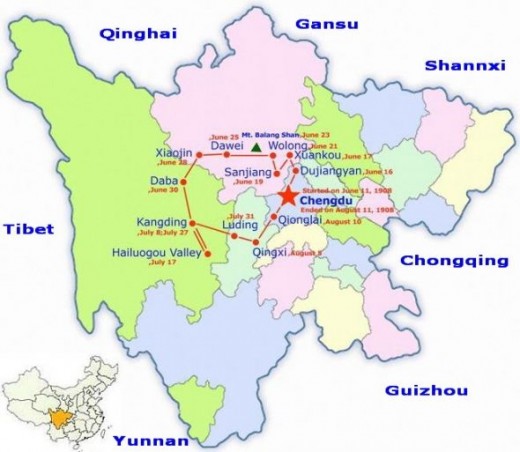
China
Plants From All Over The World
Plants in our gardens are rarely native, and with a  Horticultural Encyclopedia
or any plant book which describes the origination of the plant (many do) it is s simple task to locate the geographical location where the plant originated.
A study of a great plant explorer like E. H. Wilson can combine fascinating history with a geography slant.
Teaching Unit Studies
One of the best ways to engage your child’s interest in learning, there are many great guides available and even the planning work of the unit study all plotted out beforehand.
Language Studies and Writing
What Type Of Writing Will You Learn?
Expository writing is the type of writing you create for term papers, essays,etc.
Narrative writing is a type of writing that requires you to tell a story that describes an event or relates a personal experience.
Persuasive writing argues a point and is often called argumentation.
All three can be used in the Garden Unit Study.
Expository: Write a paper about why improving the soil is important, or a biography of a famous plant explorer.
Narrative: Relate a funny or interesting thing that happened while making the garden, tell a story from a bugs point of view!
Persuasive: To spray or not to spray, that is the question… choose a controversy and argue why your opinion is the right one.
Include How-To Books for Success

Roots, Shoots, Buckets & Boots: Gardening Together with Children
Hands on how-to is what makes this unit study so much fun.
But how do you make learning and working in the garden seem more like fun and less like work? And how to best present gardening to children? Find your ideas in this nicely illustrated guide.

Keep Nature Journals
 The best writing exercise for young children is a garden journal with pasted pictures of the plants and projects and words.
Garden catalogs, hardcopy or digital are a rich supply of pictures and information – just print out or cut out and paste into the journals. Seed packets can be saved and used, too.
Nature journals, garden journals, lapbooks about plants, can be worked into your homeschool curriculum and are especially useful in studying with the unit method. They are lasting items for school portfolios.
What is a “Lapbook”?
“An educational learning tool made from a folder and meant to take the place of worksheets.” AKA “shutterbooks, graphic organizers, fold books, presentation books, flap books, and project books”.
To find out more about the concept and difference between lapbooks, notebooks, and scrapbooks, “To Lapbook, Notebook, or Scrapbook– that is the question”.

Use pictures cut out from magazines on the topic of gardening and plants
Lapbooks are a system of file folders in which the student stores creative summaries of their work.
Lapbook creation is a lot like notebooking, another alternative way to keep and showcase your child’s Garden Unit Study projects and papers.
Basic Supplies for a: Lapbook
- Folders (regular or legal size)
- Various types of paper (construction, cardstock, index cards, etc.)
- Writing tools (markers, pencils, pens, crayons)
- Stickers, Rubber Stamps , Clipart -for illustration and accents
- Glue
Why Bother to Create These Projects?
The beauty of such projects are the physical keepsake results of your schoolwork endeavors, and the motivation it provides for your child to see that their schoolwork matters and is not just a bunch of vain or repetitious effort.
Organize Your Lapbooks
Lap books store easily in the plastic, up-right, magazine holders on your bookshelf.
Make a Nature Lapbook

example of lap book for young child
Look at these informative links
- Gardening With Children
From Colorado State comes pages on gardening with children - Language Arts and the Garden, Poems about Gardens
for grades 3-5 Subjects: Language Arts, Creativity
Science and the Garden – it is all about science…

Photo from the Smithsonian lesson on “Plants and Pollinators”.
Photo by Smithsonian
Beneath the garden soil and above it, it is all about the science of growing things. From botany to chemistry, there are a myriad of topical experiments and learning exercises in gardening.
- Find out about the pH of the soil and test your garden soil.
- What are the ingredients of common fertilizers and what do their numbers stand for? (Nitrogen, Potassum, and Potash)
- How are flowers pollinated? What is the life cycle of a plant?
- What about microorganisms, how important are they in soil health?
- Discover more about the garden than meets the eye. Take a lens ( a real lens) out into the garden to spy on bugs, look at leaf veins, inspect pollen in flowers.
68 windowsill plants from kitchen scraps – Science fun
An easy science experiment for small children is to grow a plant from a kitchen scrap. Old carrots, potatoes, sweet potatoes… many will grow roots and sprout a plant.
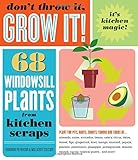
Don’t Throw It, Grow It!: 68 windowsill plants from kitchen scraps by Deborah Peterson and Millicent Selsam
Don’t Throw It, Grow It!: 68 windowsill plants from kitchen scraps
Learn how to grow vegetables, fruits, and nuts, even herbs, spices and Asian vegetables. Lots of projects to make exciting plants from a trip to the grocery, great way to get across the lessons on how what we eat comes from the earth, not the store shelves. Humorous and informative, this book will teach you more about growing plants and have more fun doing it.

More Garden Unit Studies Help
- Unit Study Planner PDF
A couple printable forms to plan a unit study - Homeschool FREEBIES
Guidance, forms, and worksheets and it s free!
Field Trips
Visit public gardens like those listed in Gardens of Ohio. Many educational events are to be found!
Math by the Yard

Example of Garden Math problems.
“Gardens are a source full of fresh fruits, vegetables, and flowers that provide for and sustain life. But did you know a garden, from its creation to harvest, is rich in mathematical concepts and connections as well?” so says Gardenmath blog and gives us one very helpful post of diagrams and examples.
You can think up all sorts of ways to apply math within the garden unit study including the suggestions included here. Measurements, accounting, and ratios may all factor in the making of a garden.
Classic and Topical Books – for young gardeners
A Child’s Garden
by Molly Dannenmaier
A guide for parents to nurture their children’s sense of wonder and curiosity within the garden with projects and lots of information on how to give a sense of imagination and play to learning
Great book to use for one of the most exciting unit studies right in your own backyard.
The longer you garden the better the eye gets, the more tuned to how colors vibrate in different ways and what they can do to each other.
You become a scientist as well as an artist,with the lines increasingly blurred.
The Arts
The Garden and Art – Many artists depict garden subjects

1
Jean-Francois Millet
Art History
Whether you chose Millet, Renoir, or Monet, Fragonard or even Gustav Klimt, the historical time or genre can be explored as well as the gardens or garden related work depicted. An entire tour of the life of Monet, Impressionism, and the garden at Giverny yield rich discoveries within a garden unit study.
Jean-Francois Millet painted many works of people busy in the fields.
A Little Garden Music
Ketelbey: In a Monastery Garden
THE COMPOSER: Albert W. Ketelbey was born in Alma Street in the Lozells area of Birmingham, England, the son of George Ketelbey (written with no accent), and Sarah Aston. At the age of eleven he wrote a piano sonata that won praise from Edward Elgar. Ketelbey attended the Trinity College of Music in London.
The Ballet, ‘The Firebird’ has scenes in a garden.
Character Development
My Family, Hard at Work

Raking is a good team project
in the Garden – Character Building: Diligence and Teamwork
One of the lessons that a garden unit study can teach is the value of being diligent and working together as a team. This is something that will be naturally absorbed in the garden work, but can be formally instilled through underlining within the teachable moments and with written assignments geared towards thinking about these characteristics.
We used this nature character study through all grades. Interesting facts about many animals integrated with Bible studies and lessons.

Character studies book
We used this nature character study through all grades. Interesting facts about many animals integrated with Bible studies and lessons.
- The Bible points to the ant as an example of diligence, and there are usually plenty of ants to observe in the garden. It is easy to perform experiments in how easy it is to get a job done when working as a team and this could also be useful for civics or social studies lessons.
- Many maxims, quotes, and poems originate in the act of gardening, ever heard of “a hard row to hoe”? That makes literature and language arts easy to incorporate. Many have to do with exercising diligence and working together to create a garden. A classic book like “The Secret Garden” by Frances Hodgson Burnett is a famous one.
- Diligence in following directions can be gained from the directions on the backs of seed packets. Plant a few in contrary conditions and note the difference between plantings
~ Marjorie Harris
For Little People – Children younger than 8 yrs old benefit from their own sized tools
A colorful garden tote filled with tools will give a sense of fun and play to any garden activity. Real garden tools, but in a small size useful for light garden projects for children. Use any sharp tools, such as secateurs, with care.

Garden Outfitters
For a range of ages, tools that will stand up to digging in the dirt and a handy wagon for playing or hauling garden supplies around.

I had one as a kid, my children had them, and I used them in the garden. This is the classic all purpose wagon.
And after years of hard use, when the wagon rusted out from being left in open weather… my Dad scavenged the wheels and made two wheeled garden carts, one for me and one for him.
The only caveat I’ll give you is that these tough little wagons last better if they are put away when not in use (another “do as I say and not as I do” piece of advice.)
I’ve used the plastic kinds, but nothing is as good as the Radio Flyer Classic.
- 5 Tips
useful tips for getting kids interested


 Combine botanical study with photography skills by visiting a live exhibit of butterflies, take your camera and capture the experience. As a result, a whole new area of discovery and research opens up within your unit study.
 Undoubtedly, when you pick the butterfly as your focus there are so many opportunities for taking detours into almost any academic subject of study. All age groups love these beautiful living gems of nature, discovering literature, science, and history through the pursuit of butterflies will be one of the most entertaining and possibly lasting endeavors your family may enjoy. It sure will be many projects to keep you going, maybe even use it as a theme for the year.
 Because butterflies are actual organisms, consequently finding related studies in the realm of science is an easy endeavor. Start with the Natural sciences –and go from there–


 </p></p></p></p></p></p></p></p></p></p></p></p></p></p></p></p>
Whether you study artists like those of the Dutch Masters or make your own project, the possibilities are endless a
nd t
he s
tude
nt’s
appr
ecia
tion
for
many
typ
es o
f ar
t is
cul
tiva
ted.
View
</p></p></p></p></p></p></p></p></p></p></p></p></p></p></p></p>
Whether you study artists like those of the Dutch Masters or make your own project, the possibilities are endless a
nd t
he s
tude
nt’s
appr
ecia
tion
for
many
typ
es o
f ar
t is
cul
tiva
ted.
View 


 “Two Butterflies and Lotuses” by Chang, Hsi-Tsun</p></p></p></p></p></p></p></p></p></p></p></p></p>
“This important insect is a native of the north of China; and a great portion of the supplies of silk for Europe and America are s</p>
</p>
</p>
till
der
ived
fro
m th
at c
ount
ry.”
– G
oodr
ich,
185
9…</p></p></p></p></p></p></p></p></p></p></p></p></p></p></p></p>
What is silk and why was the silkworm so important… why did people risk their lives to obtain silk fro
m Ch
ina,
and
wha
t wa
s th
e im
pact of the lowly silkworm on history? The beauty and strength of silk cloth would make for many fun projects as this part of the unit study is explored.
“Two Butterflies and Lotuses” by Chang, Hsi-Tsun</p></p></p></p></p></p></p></p></p></p></p></p></p>
“This important insect is a native of the north of China; and a great portion of the supplies of silk for Europe and America are s</p>
</p>
</p>
till
der
ived
fro
m th
at c
ount
ry.”
– G
oodr
ich,
185
9…</p></p></p></p></p></p></p></p></p></p></p></p></p></p></p></p>
What is silk and why was the silkworm so important… why did people risk their lives to obtain silk fro
m Ch
ina,
and
wha
t wa
s th
e im
pact of the lowly silkworm on history? The beauty and strength of silk cloth would make for many fun projects as this part of the unit study is explored.