Franz Liszt, was born October 22, 1811 in Raiding, near Sopron, Hungary in the Austro-Hungarian Empire. His father worked at the court of Count Esterházy, and gave him his first music lessons. He became an established concert performer by 12 years old, a prodigy. The Austro-Hungarian nobility gave him opportunities to study abroad and as a result his Hungarian language skills were poor, and French was his preferred language. In Vienna, on December 1,1822, he made his first appearance beginning his career as a Hungarian virtuoso pianist and composer.
Carl Czerny had taught him, Chopin and Camille Saint-Saëns were his friends, he is said to have performed for Ludwig van Beethoven. Hector Berlioz, Robert Schumann, and Richard Wagner were proteges and his daughter married Wagner. He lived in a time of great musical creativity and added his own genius to the fermenting mix of Romanticism.
He lived in the Romantic Age, when emotions were considered paramount. Whether this affected his relationships is unknown, but he did have numerous affairs, with a tumultuous personal life.
Liszt’s piano compositions are among the most technically challenging. He invented the term ‘Sinfonische Dichtung’ (symphonic poem) for orchestral works. History has recorded his great works and prestige as a performer, even though there were those who criticized and did not acclaim him during his life.
In 1861, he went to Rome, where he concentrated on religious works, and teaching. His last appearance was at the concert of the Musical Society of Luxembourg. His death occurred on July 31, 1886, at age 74.
Heard of Lisztmania? Read on and listen to the music…
Biography and Music
Portrait of Franz Liszt 1839
young Franz Liszt
Teacher of Great Musicians
after a bout of Lisztomania took place, Liszt taught others
It has been said that Liszt passed through six lives.
(1) he lived the life of a precocious and much loved child
(2) in Paris he plumbed the depths of a romantic idealism and lost reputation, but linked destiny with other great men and composers.
(3) lived with the Comtesse d Agoult for five years following the “Bohemian” life and performing to great adulation. See “Lisztomania” not unlike Beatlemania.
(4) became hailed in Europe as a virtuoso
(5) he settled in Weimer to live industriously as an supporter of art and music, becoming a church cleric.
(6) ended his life by traveling between Rome, Budapest and Weimer, eventually dieing July 31, 1886, at age 74
The Emperor Napoleon appointed him to be a Commandeur of the Legion of Honour and in 1871 the Hungarian Cabinet invested him a rank of nobility in Hungary with a yearly pension.
During his old age he lived at Weimar surrounded by his pupils.
He became known as a teacher of great musicians through his work in Weimer, where he mentored Wagner, Berlioz, Schumann and Schubert.
Now you must bear in mind, in the first place, that he had never seen nor heard the sonata, and in the second place that it was a sonata with a violin part, now above, now below, independent of the piano part. And what does Liszt do? He plays the whole thing, root and branch, violin and piano, nay, more, for he played fuller, more broadly. The violin got its due right in the middle of the piano part. He was literally over the whole piano at once, without missing a note, and how did he play! With grandeur, beauty, genius, unique comprehension. I think I laughed-laughed like an idiot. -Edvard Grieg
It is hard to imagine the emotional fanaticism that Franz Liszt inspired in his time. If one witnessed Beatlemania at its height one may have an inkling. Yet, here was one man whose musicianship and artistry transported crowds of people frenzied into mass hysteria.
Lisztomania
The writer Heinrich Heine coined the term Lisztomania to describe the outpouring of emotion that accompanied Liszt and his performances.
“Liszt’s playing was reported to raise the mood of the audience to a level of mystical ecstasy”
[Find out more]
Liszt Says
Quotable
As the mother teaches her children how to express themselves in their language, so one Gypsy musician teaches the other. They have never shown any need for notation.- Franz Liszt
Beware of missing chances; otherwise it may be altogether too late some day.- Franz Liszt
In Hungary all native music, in its origin, is divided naturally into melody destined for song or melody for the dance.- Franz Liszt
Supreme serenity still remains the Ideal of great Art. The shapes and transitory forms of life are but stages toward this Ideal, which Christ’s religion illuminates with His divine light.- Franz Liszt
You cannot imagine how it spoils one to have been a child prodigy- Franz Liszt
During what time do we find the Romantic era? From the 1770’s to about 1870.
“An artistic, literary and intellectual movement that originated in the second half of the 18th century in Europe”, this period of time imprinted its philosophy on many composers and artists we admire and enjoy today, despite the modern rejection of many of the ideas that inspired their works.
The time was rooted in the German Sturm und Drang movement, and an earmark of it was the intense emotion and elevation of emotion in expressions both abstract and pragmatic, such as the political. It was the age of Byron, of heroes and anti-heroes, and the sum of it was expressed by Charles Baudelaire: “Romanticism is precisely situated neither in choice of subject nor exact truth, but in the way of feeling.”
[wikipedia article]
The Most Important Thing
Liszt is probably most highly acclaimed for his piano transcriptions. He transcribed Paganini’s capriccios which contained almost impossible difficulties.His Career and Musical Works, Article at Classical.net
Hans Christian Anderson
Said of Liszt,”The whole instrument appears to be changed into a great orchestra.”
Liszt
Comtesse Charles d’Agoult, née Marie d’Agoult, and Her Daughter Claire d’Agoult 1849, pencil heightened with white and touches of yellow watercolor
The Women in His Life
The Countess Marie d’Agoult was the mother of his children and helped nurture his time of greatest creativity and fame. Liszt began his relationship with her in 1833. “She was said to be ”six inches of ice over twenty feet of lava”.”
You’ve heard of the “Harvest moon”, but did you realize that many cultures had names for the moon each month, through the seasons?
Of course, the Native American tribes counted time with lunar cycles and had descriptive names,many people are aware of that. But so did most agricultural societies.
Even if their calender was ruled by the sun, the months -with their planting and husbandry cycles- were ruled by the moon. Today, we only use vestiges of those old designations when we speak of a “Harvest moon”,etc.
Once though, all the months had specific names for their full moons. It can tell you something of the culture and occupations of these older societies.
Ancient Cultures
ancient cave painting
Why did People Name Moons?
National Geographic explains it this way:
“For millennia, humans have used the movement of the moon to keep track of the passing year and set schedules for hunting, planting, and harvesting. Ancient cultures the world over have given these full moons names based on the behavior of the plants, animals, or weather during that month.”
It is easy to understand that concept as one reads through the monthly names, but did you know that some cultures had lunar time keeping while in the West we have a solar calendar? How did that happen?
The commonly used calendar today is one based on those of the Romans. We use the Gregorian one, introduced by Pope Gregory XIII in 1582. The intent was to improve on the Julian calendar. The Julian calendar began in 45 BC as a reform of the Roman calendar by Julius Caesar.
Trivia Facts About Lunar Time
Muslims use a lunar calendar of 12 lunar months in a year of 354 or 355 days.
Calculating Easter Sunday for Christians requires the knowledge of the full moon cycle. Easter Sunday is on the first Sunday after the first full moon after the Vernal Equinox.
What might be the oldest known lunar calendar :
“What could be the oldest lunar calendar ever created has been identified on the walls of the famous, prehistoric caves at Lascaux in France.
The interpretation that symbolic paintings, dating back 15,000 years, show the Moon going through its different phases comes from Dr Michael Rappenglueck, of the University of Munich. ” -Read more from the article, ‘Oldest lunar calendar identified’
Full Moon: Why Does It Happen? How Does It Affect Us? | Video What happens when the Sun Earth and Moon line up (in that order)? Do people (or animals) get crazy? Commit more crimes? The Moon always shows us the same face, but there’s only one instant when the Moon is truly “Full.”
We are no longer as in touch with natural rhythms as when more of our lives were centered around agricultural occupations of earlier times.
Even the more recent agricultural practices had distanced themselves from the need to forage and hunt wild animals for existence. So, when familiarizing oneself with the names that cultures attached to the full moons it becomes easy to imagine what it may have been like to be close to nature and observe the animals like buffalo or deer. Or to know which months were best for gathering berries important to the diet.
Not only imagining, but becoming more observant and in tune with how nature’s cycles can teach us.
How we may better garden, or eat fresh locally, the moon names can provide a guide to ancient rhythms of planting and harvesting.
We can eat strawberries any time of year if we don’t mind buying our supply from something grown halfway around the world, but if you want to gather wild from the woods, or buy locally produced berries…. which month do you expect to find them?
The Algonquin Indian culture could have told you when to find wild strawberries in the Northeastern USA .
Perhaps this knowledge is more fun than useful, but isn’t there a connection between how poorly we have husbanded the earth and our disconnect from it through modern lives and cultures?
Blue Moon
What is it? An extra moon in a season, a fourth full moon instead of the usual three.
When Is The Wolf Moon?
The Native Americans named a certain time of year after the wolf. Guess which month.
Trivia Pursuit of Moon Name Facts
The moon month names follow the type of society in which they are celled. Many of the old names are from hunter gatherer societies, as in the case of the Native Americans, while others are after the agrarian society concerns of seedtime and harvest.
In all cases there is a tie between the phases of nature and the procession of full moons throughout the year.
Some Appellations Coincide
January’s wolf moon is medieval English. The North Eastern American Indian also called the January full moon “wolf moon”. It was a time when the hungry wolves could be heard outside the camp.
February’s ice moon is of Celtic origin.
November: Snow or beaver moon?
“Snow moon” is a Medieval English label for this month.
While the name “Beaver moon” is Colonial American and Eastern Native American marking the best time to set beaver traps for the prized pelts.
For Some, Cultures Took Opposite Views
The Chinese called it the white moon,
To the Celts it was the dark moon.
Lunar Names
The Native American peoples tribes kept track of time by observing the seasons and lunar months. When dependent upon certain crops or animals, the full moon in that season might reflect such practices or observations. Consequently, for many people groups the names reflect important food information.
December: The Celts called this moon the cold moon…
…It was the Christmas moon to the Colonial Americans,
Bitter moon to the Chinese…
Every Algonquin tribe called the June full moon the “Strawberry Moon”.
Celts referred to the moon as ‘queen of the night’.
Moons of Native American Tribes
Tribes with Moon Clans include the Mohave, Ottawa, and Pueblo tribes. The North Eastern tribes marked the time through lunar months, and many of the names we know as Native American Moon names comes from these tribes.
Celtic People Followed a Lunar Calendar
Celtic peoples used the lunar calendar. The Gaelic word for month is Mios relating to the moon’s disk shape.
Autumn Months
September
Tribe name in parentheses when known.
Corn Moon
Harvest Moon
Song-time
Wine Moon
Autumn Moon (Cree)
Falling Leaves Moon (Ojibwe)
Leaves Turning Moon (Anishinaabe)
Moon of Brown Leaves (Lakota)
Yellow Leaf Moon (Assiniboine)
Gourd Moon (Catawba)
Nut Month (Cherokee, Eastern Band)
October
Hunter’s Moon
Travel Moon
Dying Grass Moon
Blood Moon
Seed-fall
Drying Rice Moon (Dakota)
Someone Stores Food Moon (Oneida)
November
Snow Moon
Dark Moon
Fog Moon
Beaver Moon
Mourning Moon
Blotmonath (Sacrifice Month)
Herbistmanoth (Harvest Month)
Mad Moon
Moon of Storms
Moon When Deer Shed Antlers
Trading
Falling Leaves
Early Farming Societies and Lunar Phases
Dating back to the Neolithic times, when farming became the prevailing mode to replace the hunter-gatherer lifestyle, the basic phases of the moon, especially relating to full and new moons, helped calculate seedtime and harvests.
Gaelic, a language of the Celts, is rooted in hearth and home, observing nature, including the features of each month’s full moon.
Winter Months
December
Cold Moon
Oak Moon
Wolf Moon
Long Night’s Moon
Aerra Geola (Month Before Yule)
Wintermonat (Winter Month)
Heilagmanoth (Holy Month)
Big Winter Moon
Moon of Popping Trees
Deer Shed Their Horns
January
Chaste Moon
Cold Moon
Disting Moon
Moon of Little Winter
Quiet Moon
Snow Moon
Wolf Moon
Strong Cold
February
Big Winter Moon
Horning Moon
Hunger Moon
Ice Moon
Red Cleansing Moon
Storm Moon
Sun Moon
Quickening Moon
Wild Moon
Chaste Moon Dark Red Calves
Trapper’s Moon
Midsummer Night Moon | Source: Larisa-K on Pixabay
The Spring Months
Full Moon Names
March
Sap Moon
Lenten Moon
Crow Moon
Crust Moon
Sugar Moon
Chaste Moon
Death Moon
Plow Moon
April
Sprouting Grass Moon
Fish Moon
Pink Moon
Seed Moon
Waking Moon
Budding Moon
May
Flower Moon
Corn Planting Moon
Milk Moon
Hare’s Moon
Mother’s Moon
Summer Months
June
Strawberry Moon
Rose Moon
Honey Moon
Hot Moon
Flower Moon
Bright time
July
Buck Moon
Thunder Moon
Hay Moon
Mead Moon
Horse-time
August
Full Red Moon
Green Corn Moon
Lightning Moon
Dog Moon
Fruit Moon
Arbitration-time
Phases Of The Moon
The BeautIful Face of a Fullmoon
“The moon was but a chin of gold
A night or two ago,
And now she turns her perfect face
Upon the world below.”
Emily Dickinson.
Moon Related Links – Moon names, facts, and inspirations
Perhaps it was the name, or perhaps it was just my nature, but curiosity and machinations of the mind led me along an investigative trail. Not merely into the definition of the name which began the whole venture, but into cultures, history, and the subjects of etymology and linguistics.
Ilona Is an Unusual Name
Now here is the story of it all. My name is an unusual one in American culture; and as such, it is often positively remarked upon, misspelled, mispronounced, and requiring attention from those addressing me. So, it is not surprising that I have had a fascination with its meaning. It has become a bar by which I judge the quality of baby-name books and name lists. If the author does not include the name, Ilona, then I can only conclude a lack of scholarship on their part.
There was the tantalizing knowledge that this was not only a “name”, it was a family name, and one which was popular in the Hungarian heritage. It meant something, stood for something, greater than my own unique self. What could that be? And what import could that hold for my destiny, if any?
In other cultures, a name often holds much for an individual. In fact, in the study of the Bible many insights may be gained by name meanings. The Hebrews always had a meaning for their names, and their language is very picturesque. When naming an animal,for example, they used descriptions of qualities, which in turn helps to identify the animal in question. Sometimes the people of cultures were expressing qualities they valued when naming their children, and sometimes names of individuals changed as they exhibited certain qualities. A name is a most personal identifier.
In the Baby Name Books
Almost all name books identify the name “Ilona” with the name of “Helen”. The further I look into things, the less I might question that. And yet, there are some things to look at in this. The name Helen is a “Hellenization”, a Greek version of the name. In other words, it was the Greek interpretation of a name which perhaps originated within a different sort of language.
The name ‘Helen’ seems identified with the Greek god “Helios” representing the sun, and usually interpreted as “Bright and shining”. One of the main reasons I questioned the identification of “Ilona” with “Helen” is the fact that it turns up in both the cultures of Finland and Hungary. To me, that suggested that perhaps it was derived from within the language group of the Ugric/Finno forms rather than the Indo/European one of Greece.
Although the Greeks named people after their gods and goddesses regardless of the sexual identification, the ancients didn’t usually correlate the sun with femininity. To further complicate the quest for the name meaning is the story of Helen which is entwined with the city of Troy, found in the land which is now Turkey, a country whose language is in the Ugric/Finno group. So upon a circuitous quest I went.
Down the Name Meaning Rabbit Hole
Not being a scholar, but a curious sort of person, I started looking around at the word groups common between the languages in the Hungarian and Finn category. I started by looking at sites that were about the Ugaric/Finno language group. Then after finding some leads on word roots and (pre/suf)fixes for words, I went to language dictionaries in the related languages and put in queries on words that might produce another lead. Unscientific, but producing a couple interesting possibilities. This is the type of thing curious people do, and I suppose it seems a monumental waste of time for the more practical minded! Among the things I came up with are these:
The ‘na’ ending in these languages had the connotation of” having the qualities of ” or back in the Sumeranian “to be with”. I saw a possibility that it might be the usage of the end portion of the name Ilona, particularly in the way a Hungarian pronounces the name: E’-LOH-nah … the nah being a short end sound, not drawn out as other similar names in more western Euro countries.
The “Ilo” part had several possibilities, but since the idea usually associated with the name was of beauty, I found the ideas of the Hungarian “illat” meaning fragrance as close, and they also have an “illő” meaning fitting or decorus. Within the Finn definitions for the word “ilo” are ideas of bliss, delight ,satisfaction, rejoicing, all of which could be reactions to a fragrant smell or perfume.
The Estonian word for perfume also has a form very similar and could be pronounced like “Ilona”.
All this led my own conclusions to identify the feminine name “Ilona” with a meaning more identified with the delight of a fragrant perfume rather than dazzling the eye, as the name of Helen would indicate. So now to end with a sound byte useful for a name definition book, how about “Ilona- one who has a delightful perfume of joy”? I’ll go for that, since I think fragrance is one of the enjoyments of life.
Linguistics, History, and Names
Sometimes I can’t believe all the eye-straining lists of words I pored over, but it does take one into the history of origins of language and nations. The migrations and settlements of those that became the Hungarian people ranged across the Asian steppes to possibly be a part of the Scythians, and traces of these peoples seem to be within the Carpathian mountains retaining an unusual language formation to this day. The confederations of early times, and even some of the values of cultures are traced within names and languages. My dad grew up around the lakes, where a a number of Finns immigrated, and states ” They are the hardest working, toughest people I know”; and the history of their land and that of Hungarians are of people who survive in spite of the toughest of circumstances. Not always the wisest, but very brave people. People who have stood against the armies of empires, at great cost to themselves, people as unique, complex, and eccentric as their languages.
lényeg- essence,MAG illat- fragrance,MAG illő – fitting,decorus,MAG na =mother /Scyth nä =to be with /Sumerian “n., human being; incense” Õ difficult sound for Russians and Finns; like the first part of the diphtong in ‘most’ or ‘road’. Do not confuse this with Portuguese – the only other European language using o with tilde. -Estonian dialectical mark íl, íla, íli = to carry; deliver; carrier; etc. -Sum. iha = desire; ihalda- = desire, long (Es) / iha = allurements, charms; grace; merry; ihaile- = admire; ihalta- = admire, gape at; long, yearn for; ihaile- = admire; ihana = delicious, lovely; ihastu- = be captivated, be charmed, become delighted; fall in love (Fi)
Summarizing
Now to end on a note of further speculation, years ago within a fairly extensive book of names (which I now forget the name of) the name Ilona was interpreted as meaning “Beautiful Spinner”. None of my sources turned up anything similar,so it remains a mystery whether that could have highlighted any other shades of meaning. Perhaps the fact that the Magyars were a herding nomadic people,along with the long association of the name with “beautiful” may have inspired the author of that definition?
In further reading on Hungarian and other fairy tales, especially in Eastern Europe, the fairy folk were often identified as those who interfered or helped with household duties such as spinning or milking. I could guess that the spinner and the fairy were the same person, and that the definition chosen for the name derived from one of the old fairy tales.
And how might I have been different, as a person, if my parents had named me “Jane”? …would the rose, by any other name, have been the rose that we now know?….and could this lead to an essay on the Latin nomenclature of plants? …Let’s all hope not.
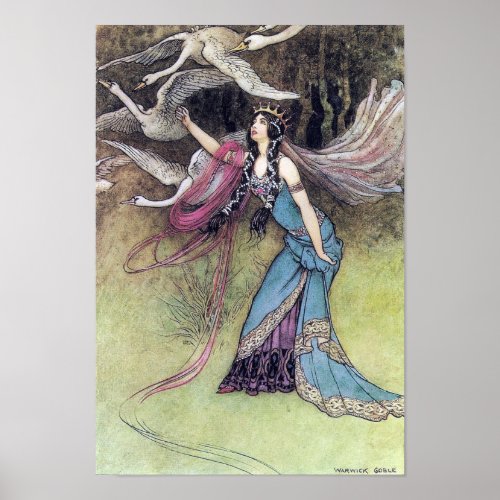
I have found more on the beginnings of the name, ‘Ilona’. One of the early pagan beginnings had a myth of someone called “Tündér-Ilona”. I believe it is from this that the long association of the name with ‘beautiful’ derives.The word, Tündér, is sort of a fairy person. The word relates to the Altaic languages TEN-GRI and Sumerian DIN-GIR, who are the the lesser gods of the Sumerians of Mesopotamia. The stories most related to Ilona: The queen of the “nymphs”, who were often associated with heaven and wet places, mountains etc., was the beautiful “Tündér-Ilona”, who often was represented by the swan in Hungarian fairy tales.
Perhaps a variation of the Parthian and Mesopotamian NANA or Sumerian goddess Dingir-INANA, the daughter of the Moon, who was the young goddess of the heavens and also at times was warlike, and a seductress. Sometimes she is called szép-aszony meaning beautiful queen, in Hungarian. (széép means beautiful, asszony is a title for wife now, but was also for “queen”). It was sort of a weird coincidence that I had chosen “Reflecting Pool” and the motif of a swan for my website. Although the swan was used earlier in my designs.
When you have an unusual name, it is easy to wonder along with those who ask you: “where did you get that name” and does it have a meaning?
This page was written for my old Squidoo pages, it will now reside here.
Furthermore…. the following will likely sound redundant in places since it was my original html page on what was, for me, a subject of fascination.
Investigating the Name Ilona
Meaning of the Name, Ilona
I’m Hungarian by descent, and my name is Ilona. Those two facts are linked and provide the basic reason to share this story of the investigation of my name with you.
Names have meanings and at times people attach great significance to their names. For some, the name of a child portends their future, or it may designate something special within the child or their family. It just might represent the hope of the parents. There are many reasons a name may be chosen.
In my family there were a number of the girls that were named Ilona: my grandmother, my aunt, a cousin, and myself. Both my cousin and I named one of our girls, Ilona. In the mainstream of America, though, this name is not all that common, but people tend to react positively to it. Perhaps that is one reason I was quite interested, for many years, to investigate the meaning of the name.
Names have interesting stories, and they are not always what you would expect. The name of Ilona turned out to be one of those unusual stories, which seems quite appropriate for a somewhat unusual name.
Baby Name Book – where I sought the first information – … so many,many names
Most good baby name books give fairly accurate name meanings and root source of a name. In fact it was a particularly good name book that started me wondering why it listed a different meaning for “Ilona” than many of the more common books I had referenced.
People have long attached more than the mere word to names. For many cultures it called out the destiny of the person, or memorialized a significant event of their lives.
There have even been secret names that only the clan knew, and though we seem far removed from that today, it remains that people still attach special meaning to themselves through their name. This book is meant to give background on a very large number of names for those interested in that information.
Tunder Ilona
This was a fairy or being that was associated with watery places in Hungarian mythology.
Almost every baby name book will say that the name ‘Ilona’ comes from the name ‘Helen’. Helen is a Greek name originally, and the Russian form of Helen is Elena. When you hear it pronounced, it sounds very much like Hungarian pronunciation of Ilona.
That linguistic phenomena is called a cognate. The dictionary tells us: “Linguistics descended from the same language or form: such cognate languages as French and Spanish”.
A cognate word: The English word water is a cognate of German wasser. In fact, the two languages have many cognate words with each other.
So if you follow that line of thinking, similar sounding names could also be linked in that way. The related meaning of the name Ilona could possibly derive from the name Helen, the Trojan princess whose beauty ignited the famous Trojan wars of ancient time (at least that is how the legend goes…)
The trouble with that idea, for me, was the fact that Hungarian is such a different language group from the Greek. That, along with originations of the name “Ilona” which come from the Eastern hordes (from evidence and Hungary’s own stories), and not from later influence from European territories and languages. Besides that, I found that Finns, a language group that is supposed to have some distant relation to Hungarian (see the link on Ugaric languages) also traditionally has the feminine name, Ilona .
That triggered a desire to investigate further this family and cultural infused name of mine.
The old name book that I had read, back in 1967 (far enough back in time that I could not remember the name, or relocate it), had given the name meaning as “Beautiful Spinner”. I had latched on to that as an intriguing name meaning. It was very different from the usual “Bright Light” or “torch” of Helen which was given in most name books.
Here is a bit more of the etymology of Helen’s original name:
“Helene is a direct transliteration of the ancient Greek name found in English as Helen or Helena. Its etymology is disputed and has been complicated by shaky theories placing, for example, ‘helene’ as a cognate of ‘selene’ (moon). It has also been suggested that the name comes from an Indo-European root meaning ‘shine’. The strongest theory suggests the name comes from ‘helene’ (also found ‘helane’), meaning ‘torch’, or ‘helene’, meaning ‘basket’. The torches were made from bound together reeds and the baskets in question were woven wicker and rope. Therefore, ‘helene’ may mean ‘wicker’, ‘reed’ or ‘shoot’ (it was not uncommon in Greek for a word for a material to come to refer to an object itself made from that material). The modern French form of this name is written Hélène and pronounced ‘ey LEN’.”
The question for me was “Where did the spinner part come from?” “Why was the term “Beautiful” connected with “Ilona” in the old fairy myths of Hungary?
I followed a path that led to the “fairy” legends of Tunder Ilona, who was the Hungarian Queen of Fairies. I also took a look, not a scholarly one, but based on my own conjecture of the meaning of root words common to some of the languages related to Hungarian.
It is simply guesswork and nothing else, so I don’t know if there is any accidental accuracy or not!
One trivia fact I found was that often fairies were connected with the chore of spinning. This was true in the myths of a number of cultures. More well known is the way fairies are thought to spoil milk if offended.
Fate, fairies, and spinning or weaving are all interconnected in the early tales that people used to explain events and influences that impacted their daily lives.
Spinning was a woman’s particular duty in many cultures, and a very important one. Fairy tales which still contain elements of the importance of spinning; two tales including the interference of fairies are Rumpelstiltskin and Sleeping Beauty.
In many tales fairies come to help the spinner do their work. Their help often held an unpleasant price to pay, and so the women were forced to find a way to trick the fairy folk to leave. Such stories, I believe, would have been the source for Tunder Ilona- the fairy named Ilona and spinning. Of course, she was beautiful as most fae women were, which is the beginning of another story, one of the power of a beautiful woman and the cautionary tales about such things.
That thread is where the author of an old name book was likely to have derived the meaning for the Hungarian form of Ilona, at least in my telling of the story.
Here is a short excerpt of a Tunder Ilona tale:
THE WATER OF ENDLESS YOUTH
“In the very center of the copper castle is the chamber of wondrous fair Ilona, she is sleeping there now. The couch of fair Ilona is neither on the earth, nor in the sky, but is in the air between the earth and sky, and a stairway goes up to it. …
In the corner of the chamber gush forth two fountains. In one is the Water of Endless Youth, in the other is the Water of Death. Take water from each fountain. Here is a flask. Fill it for me from the fountain of Youth, for I, too, would like to be young again.” – Fairy Tales Of Eastern Europe
Seeking the origin of Ilona – Hungarian and Finnish Girl’s Name
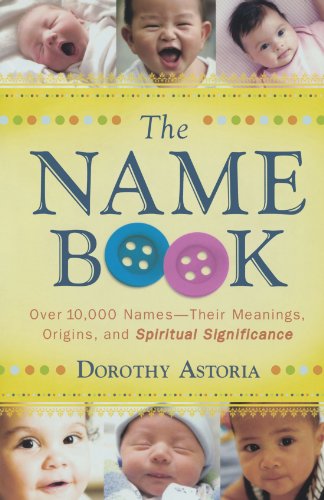
This has more names than any other baby name book I’ve come across.
Name Day August 18th (Hungary) In Hungary, the name Ilona is celebrated as a Name Day on August 18th.
Ilona – Wikipedia, the free encyclopedia Ilona is a Magyar (Hungarian) female given name. Etymology is uncertain. Ilona is the traditional name of the Queen of the Fairies in Magyar folklore,[1][2] though a possible etymo
Finnish ilona “as a joy”, as in Tämä lapsi on meille ilona : “This child is a joy to us”.
Root Words:Ilo
Finding what’s at the bottom of the name
To make a long story short, (although you can read the long story, here) I found that the most likely meaning of the word Ilona was the combination of the suffix -na and the root word “ilo”. From what I could piece together in the related languages.
In Finnish, which is grouped with the Hungarian language:
There is a word, the root “ilo” in the essive case, which is translated “as a delight”.
The ‘na’ ending in these languages had the meaning of “having the qualities of” or back in the Sumerian “to be with”.-Ilona
Ãl, Ãla, Ãli = to carry; deliver; carrier; etc. -Sumerian.
If you study fragrance you know that certain parts of the perfume ingredients are carriers of the other essences which comprise the fragrance. It is that idea that I began to see within the roots words for the name Ilona.
Finns celebrate the 9th of October as a Name Day for the name Ilona.
Ilona Zrínyi – and other famous women
Ilona Zrinyi, Hungarian heroine
… an odd assortment of women named ‘Ilona’ who I find interesting.
Ilona Zrínyi spent her life fighting for Hungarian freedom, as wife to Ference Rákóczi I and then to Imre Thókóly. She was the mother of Ference Rákóczi II.
Vlad the Impaler married Ilona Szilágyi, a cousin of King Matthias, and in the years before his final release in 1474, lived with her in a house in the Hungarian capital. She bore him two children.
Is Ilona Your Name, Too?It is not in the top 1000 names in the USA, see if yours is, here. Ilona is used as a first name 77.14% of the time and as a middle name it is used 22.86% of the time. One in every 20,063 Americans is named this.
My family also uses Amazon Prime often, which saves us money on shipping and more.
Please support my site by using my links, thank you. This Page may contain affiliate links. “As an Amazon Associate I earn from qualifying purchases”


 Franz Liszt: The Final Years, 1861-86 v. 3, 1861-1886. Cornell, 1996 v.3 p.169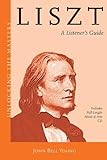



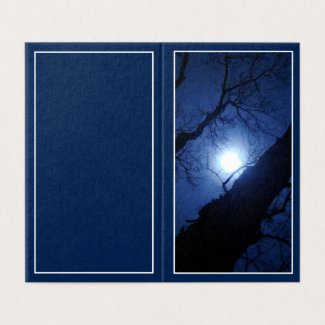
 The Native Americans named a certain time of year after the wolf. Guess which month.
 Celtic peoples used the lunar calendar. The Gaelic word for month is Mios relating to the moon’s disk shape.



 Source:

 This has more names than any other baby name book I’ve come across.