The Beauty Of Beach Glass, Sea Frosted Gemstones

The Beauty Of Beach Glass, Sea Frosted Gemstones

A Beachcomber’s Treasure

Trips to the beach often involve walking along looking for interesting shells or whatever the ocean tides wash up upon the shore. It is one of my favorite vacation pastimes.

Sometimes the treasure of a water-frosted gem catches your eye, glimmering amid the sea wrack line … and you add the new found piece to the collection of your seashore souvenirs.

Who isn’t taken with those wave-washed gems of the sea, the beach glass of different colors? Here is the story of sea glass and the way creative people have taken these humble pieces of broken glass to create really lovely hand crafted jewelry.

It might surprise you to know that these bits of broken glass are valuable once the sea has refined them and brought out their beauty. I learned to love them when I bought a pair of earrings during a visit to Maui.

Colors of the Sea

Colors of the Sea

Colors of the Sea

What Is The Difference?

Technically, sea glass refers to salt water glass and beach glass refers to fresh water glass.

Pure Sea Glass: Discovering Nature's Vanishing Gems
Pure Sea Glass: Discovering Nature’s Vanishing Gems

Over 200 elegant images by photographer Celia Pearson present some of the best sea glass ever collected; find out everything you want to know about sea glass and how it came to be a highly prized gem.

How They Became Sought-For Gems – Illustrated with wonderful photos

Read an Interview with the author of ‘Pure Sea Glass’, which gives you insights into this acclaimed book that seems to be on every beach lover’s list.

beach glass jewelry

beach glass jewelry

What Makes Beach Glass?

Castaways become treasured finds

What makes these frosted seashore beauties? What do people do with them? For me, the few I have are memories of special family vacations, but for many they are prized for the softly casual gleam and color they bring to a piece of jewelry.

With a little know-how, you can turn your finds from walks along the shore into works of art, crafts, and gifts.

Over many years, even centuries, people have broken dishware, vases, and bottles and dumped them; many of those found their way -in some manner or another- to the water.

In creeks and rivers, near lakes and in the oceans, the little bits and pieces were washed and tumbled by waves and ripples, ground by sand, stone pebbles, or seashells.

This work of nature softened the look of the surface of the shiny glass and rounded the sharp edges. Many of these glass bits became frosted and beautified, washing up on shores. Some became caught behind rocks or just part of the debris washed ashore during storms. In special places like Glass Beach in Ft. Bragg, California, they were caught in a natural tumbler action and built up many of these glass pebbles and deposited them on land.

It can take between ten to thirty years for this completely frosted look.

Oceans cause a more weathered look than the waves of freshwater lakes. The pH of the water also affects the surface and its minerals remove elements and cause pitting. Time and water with the wave action works on the glass or pottery pieces to create the worn, frosted gems we call beach glass. Sometimes sunlight and other factors change the colors.

Why Is It So Desirable Now?

The changes in the way we live contribute to the increasing scarcity of seaglass examples. We exchanged glass containers for plastic, became more careful about dumping refuse into our waterways and the oceans. It goes without saying that there are far less shipwrecks from which broken glassware might enter the ocean waters.

All these factors contribute to the depletion of sources for finding the once abundant colored pebbles we love to find on beach walks along the shoreline.

More people are interested in combing beaches for what can be found, and that has also contributed to the rarity of finds.

There is no such thing as officially certified sea glass, and the buyer must rely on the reputation of the seller or their knowledge of genuine characteristics.

Best Time For Beachcombing

“The best times to look are during spring tides and perigean and proxigean tides, and during the first low tide after a storm.” -Wikipedia

Do You Collect Things While On The Beach? – What is your favorite find?

Gorgeous sea glass

Gorgeous sea glass

Do you do more than just admire beach glass, shells , or something else when walking on a beach. We would love to know what you collect and what you do with your collection.

What do you collect while walking the beach?

Let me know in the comments.

The Tale Of Mermaid Tears

sea glass beach

sea glass beach

How To Find Your “Mermaid Tears” – You might find a gem!

green seaglass

green seaglass

Beachcombing

Follow the wrack line, which is the line of debris left by the last high tide or storm, as you walk along the shoreline. Pay close attention to places where small shells and pebbles accumulate. Look for pockets of rocks and pebbles that collect just at the water’s edge.

Especially search during bright days when the gleam of sunlight can reflect off of the shards.

Have you found a place with several pieces in one area? Are there various colors? You may have hit the motherlode! Comb that area.

Places that were popular tourist spots in the early 1900s, old coastal dumps especially of old glass factories, all might be a treasure trove of finds.

Places that are likely to have treasures:

  • a beach with limited access
  • See one that is harder for the usual beachcomber to enter? A greater chance of making finds, there.
  • Search shoreline gravel washes for lodged pieces among the stones

Do you know what to look for?

Well worn bits of glass or pottery, even the larger pieces of bottles qualify as long as they are wave washed.

It surprised me that pottery shards would be considered as “gems”. I really never took notice of them, although I can remember finding water worn bits of beer and coke bottles as a child.

You might find the Pinterest board dedicated to sea glass and sea pottery to be an interesting visit.

Home of the International Sea Glass Museum

In Fort Bragg, California, a museum of Sea glass was created by Capt. Cass Forrington

International Sea Glass Museum Site

Ft. Bragg is also home to the Sea Glass Festival which takes place on Memorial Day Weekend. The area claims to have the highest concentration of sea glass on its beaches due to a unique rock formation on its coastline.

If you visit the Glass Beach State Park, collecting glass is prohibited to preserve this feature for the future. If like me, you also love to take photos of beaches and their many facets of visual beauty, those restrictions won’t matter. It is a unique opportunity to see loads of examples of frosted glass pebbles all in one place.

The Beach has been depleted of its glass over the years, and many who review this attraction have voiced disappointment, but others find it still holds plenty of interest. The beach is bound to have changing conditions with tides and storms, etc. For me, the chance to see a beach with lots of these finds still holds interest.

Other Places To Comb The Beach

On the coast of Maine: Bar Harbor, Jonesport, Land’s End, and Belfast.

Lake Erie from Cleveland to Conneaut, Ohio may yield results. Try Durand Beach in Rochester, NY or Presque Isle in Erie, Pennsylvania.

An excellent area to look is on Glass Beach, Kauai, Hawaii.

There are a number of well known sites off the coast of England, as well. The beaches of Northeast England are one of the best known areas.

~~~//~~~

Be sure to walk slowly while sweeping the ground with your eyes. Bend down and touch potential pieces to check them..don’t just quickly pass by.

For Those With A Passion

A Passion for Sea Glass

A treasure of gorgeous photos, this is a book to savor. Anyone who loves the look of seaglass, whether they collect or not will be taken with the beautiful ways that a simple gift from the sea can be displayed.

Purchase on Amazon Kindle

Bottle Green

gems from green glass bottles

Gems from green glass bottles

Variations: Why and How It Got Its Look

Glass from inland waterways such as Chesapeake Bay and the Great Lakes (fresh water areas) is known as beach glass. Chips and pieces of broken bottles and glassware become the frosted pebbles formed by the wave action of the water.

The power of the waves and salt create a somewhat different look than those formed in freshwater.

Oceans give a much more weathered looking effect than the Great Lakes.

The Colors Of Seaglass

There are numerous colors and some are more rare than others, but all are becoming harder to obtain.

Kelly green, brown, and white colors are the most common.

Amber, lime green, jade, as well as forest green, ice and soft blue colors may be found from the remains of old whiskey, medicine, and juice bottles, soft drink bottles, ink containers, and even poison bottles.

For some collectors, it is the old shards of pottery that hold their fascination. The minerals of the seawater, the catalyst of the sun, and time will sometimes give these shards a special sparkle, but they are all weather and water worn and create a desirable look that collectors love.

It is possible to find pink, yellow, red, and gray tints.

Lavender is usually the result of clear glass that had been refined with magnesium.

What Are The Rarest Colors?

Purple ocean glass is very uncommon, and so is citron, old milk glass, cobalt and cornflower blue colors.

Orange is considered the rarest of all.

“Mermaid Tears” is the sentimental term for the frosted chips that glimmer on the beaches.

The wrack zone is part of the shore just above the mean high tide line where kelp is deposited on the sand. This is a primary place to search.

Places rich in finds may have idiosyncratic characteristics: some are better at low tide, some at high tide, some beaches are better at certain times of the year. Look during the fall and spring, give attention to gravel beaches or where rivers empty into the sea.
on Flickr

Looking for Quality

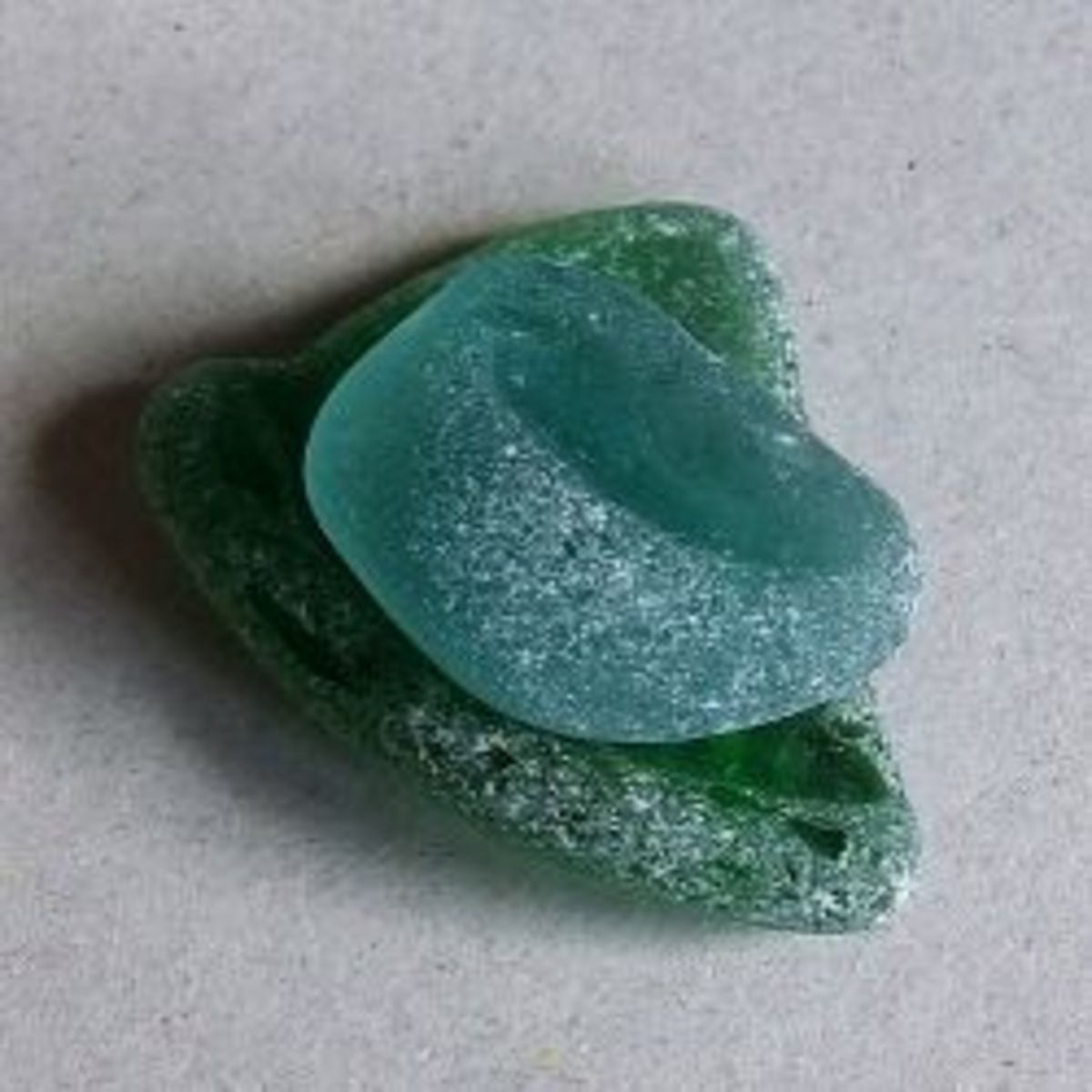
A quality piece has smooth edges with no shiny spots; its surface is well frosted in texture.

What are some of the conditions that lead to an old bottle becoming the sought after stones that beachcombers and jewelry makers are looking for? Higher water pH and rocky shores will contribute to faster aging of the glass. The rougher the beach, or rock formations, the more likely the frosted appearance of the refuse glass will be created in a shorter period of time.

Searching is called “glassing”, and the times which are best are often after strong storm winds have stirred up the sea. Not ideal vacation conditions, but loved by inveterate “glassers”.

“Rounds” are the bottom of bottles. Sometimes large whole rounds can be found and are highly prized.

Items with embossing are very desirable, The patterns can give clues to age and origin, one example being a story told by Capt. Cass of the International Sea Glass Museum in California. He tells of a piece of glass that had a rose embossed on it.

Glass Beach in Ft. Bragg, California

When old broken household plates, bottles, and pitchers that were no longer useful to them, people went to the nearest body of water and dumped them. The formation of the famous Glass Beach in Ft. Bragg California happened in just this way.  The broken and wave tossed items collected here at the shoreline. The unique rock formation also had a hand in this process. Those rocks kept everything from washing out to sea and formed a particularly rich trove of finds. One factor in Ft. Bragg’s site was the earthquake damage which was dozed from the land and carted into the sea.

The site at Ft. Bragg is probably the most famous and claims to have the most density.

A

The Festival Location for Ft. Bragg:

17801, North Highway 1 Fort Bragg, Ca 95437.

get directions

Festivals

The surprising number of festivals dedicated to seaglass aficionados is astounding.Iif you attend one of those events It is likely that you will find plenty of jewelry. Made by artists exhibiting their creations in vendor stalls. Perhaps that might be a good place to glean some advice on the skills of the craft, too.

Wish You Were Here
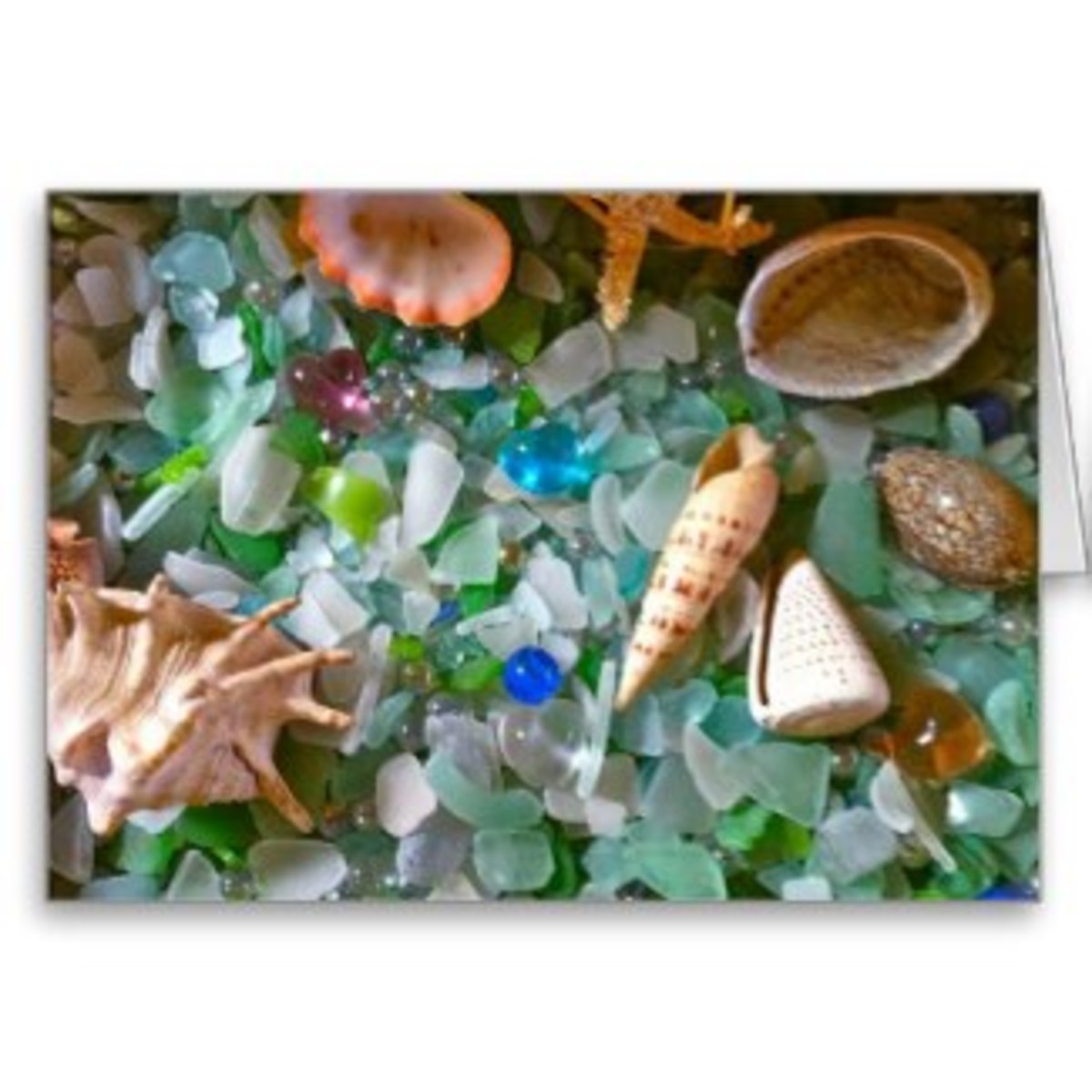
Zazzle cards

“Lightning Glass”

This is actually Fulgurite, and not glass at all.

As lightning hits sand in just the right conditions, fulgurites are created. They are not smooth and rounded.

Romantic Red Rose Petals

Romantic Red Rose Petals

Create Wedding Décor, Crafts, and Flavor

  Used through the ages, follow the romance of how petals have imparted fragrance in so many sweet ways. Whether you strew aisles and  tables, make jam or rosebeads, they’re delightful. 

The Romance of Red Rose Petals

Red rose petals breathe romance and are a favorite for weddings, and romantic candle lit décor. They add fragrance and tactile luxury when you touch their soft and smooth, slightly cool skin between your fingers. They can add flavor to foods, and color as well. Explore and examine the beauty of Red Rose Petals… Nothing is lovelier for strewing around a room than fresh rose petals.
flower girl

Flower Girl can fling fragrant flower petals along the wedding aisle.

Perfect for the flower girl to scatter down the aisle.

Immortalized in Burn’s Poetry

Oh, my luve’s like a red, red rose, That ‘s newly sprung in June
useful petals

Useful in so many ways

Fresh Petals – Perfect for weddings

If you want to use rose petals for food purposes, I would not purchase commercially grown roses. Only gather your own home grown blooms that are organically grown, without insecticides or fungicide. Use your own judgment for crafts, but I would only use the purchased flowers for decorative purposes. For my daughter’s wedding we used fresh red rose petals on the reception tables and at the ceremony in the flower girls baskets. It was a very pretty touch.

List of Roses with Red, Fragrant Petals

Gather your own rose petals

Some of these are ‘old roses’ or heritage varieties which can be hard to find in the market, but all are worth growing. The hybrid teas will bloom throughout the season, the old roses bloom only in early summer. this list is not definitive, but will give you a base of named roses to look for when desiring red colored petals that are fragrant.
  1. Mr. Lincoln
  2. Charles De Mills, gallica
  3. Fragrant Cloud
  4. Rose de Rescht
  5. Don Juan
  6. Oklahoma
  7. Red Masterpiece
  8. Alec’s Red
  9. Baron Girod de l’Ain
  10. Chrysler Imperial
  11. General Jacqueminot
  12. Hugh Dickson
  13. New Yorker
  14. The Dark Lady
  15. The Squire

Rose Beads, an Ancient Craft

Rose Petal Trivia

Reaching back into ancient time, as roses and their use and culture are from very early times, the making of rose beads is known to have been well established by the middle ages. Rose beads became favored for making prayer beads, known as the rosary. Victorians developed the process with the use of fixatives and binders which made the beads stronger and able to retain their scent for a much longer time..[2] Gum Benzoin and Ground Orris root are two common and easily obtained fixatives. Damask or Apothecary roses are the old roses which are still used to manufacture rose oils. Though not commonly available, they can be ordered from nurseries. Cleopatra used roses to envelope herself in fragrance and allure. It is said that she had the palace floors carpeted with rose petals, her chamber filled two feet deep with red rose petals, and the fountains filled with rose water in preparation for Mark Antony. No wonder he was so taken with her.

Rose Petals and Flower Girls

In medieval England, it was traditional for the bride to be preceded by a flower girl on her way to church, who would strew fresh rose petals before her to signify happiness. Create an Amazon Wedding Registry

Create Your Own Rose Beads

Gather together the materials and make fragrant beads for jewelry or other crafts.

Make Rose Beads for a Rosary

  • Red, fragrant rose petals
  • Water
  • A saucepan
  • A needle
  • String for stringing.
Instructions
  1. Gather the roses
  2. Chop the petals as finely as you can
  3. Put them in a saucepan and barely cover with water.Using a cast iron skillet will give a deeper color to the beads
  4. Heat for an hour but do not let boil.
  5. Repeat for three or four days, add more water if needed.
  6. When the petals are the consistency of clay, start molding the beads.
  7. Press out as much water as possible in a sieve.
  8. Roll the pulp into balls.
  9. They will shrink by half when dry, so make them about an inch diameter.
  10. After somewhat dry use a large needle to make holes in the center of each beads
  11. When dry, string them.
The warmth of your body will release rose fragrance from the dried beads. 250 Wedding FRESH Rose Petals Valentine Mix 250 Wedding FRESH Rose Petals Valentine Mix

Rose Bead Recipe #2 – Or Make A Necklace of Fragrance

Here is an alternative recipe from C. Jeanne Heida. This one replaces cooking the petals with repeated grinding.

Materials

  • You will need:
  • A meat grinder
  • A cast iron skillet
  • A box of thin picture nails- at least 3/4 inch in length
  • Jewelry string
  • Laundry basket full of fresh rose petals

Instructions

  1. Grind the petals twice through the meat grinder.
  2. Spread the petals in the skillet, cover and set aside.
  3. Once a day, grind the paste through the meat grinder, then return the paste to the skillet.
  4. After several days, you will notice the paste slowly beginning to turn black or deep brown. Continue to grind the petals daily, for 10 to 15 days until the rose petals have turned into a dense, putty like material.
  5. After the petals have been turned into a dense and pliable paste,shape the rose paste into circles or squares.
  6. Insert a nail through the center to create an opening for the thread. Wiggle the nail to enlarge the opening slightly larger than the nail itself.
  7. Set the bead aside and let dry thoroughly.
  8. After the beads have completely dried, remove the nails.
  9. The beads can now be threaded onto the jewelry string.
  10. Place small knots between the individual beads to prevent them from touching each other.
 

Floral Flavor

Try using rose syrup in cocktails,  over vanilla ice cream or panna cotta,  mixed into fruit salad, and drizzled over crepes. Desire something quick, on the shelf? Bottled syrup is available on Amazon. Monin is considered a quality line of syrups.

Rose syrup

  • 6 packed cups of rose petals
  • 12 cups water
  • 6 cups white sugar
Instructions
  1. In large bowls add rose petals, have a large heavy platter that fits over the bowl snugly.
  2. Bring to a boil 12 cups of water and pour over rose petals and quickly cover with platter.
  3. Set aside till water cools.
  4. Strain water and discard petals.
  5. Mix water and sugar in a large pot and bring to boil till sugar is dissolved. But do not boil, only heat water enough to dissolve sugar.
  6. If the color is not to your liking, you can adjust it. Add food coloring. Keep refrigerated. Will last about 3 months in fridge. Or you may also can it for longer storage. Use it drizzled over fresh fruit, in custard, on pancakes with fresh berries, in iced tea.
  7. Note: To make the syrup pink you can add 1/8 cup or 2 tbsp. lemon juice to each cup of rose infusion. It is fun to watch it turn pink before your eyes. The lemon juice may also act as a preservative and lengthen the shelf time.

Culinary Red Rose Petals – Dried petals added to teas or foods

Teavana makes one of my favorite white teas with dried fruit, rosebuds and rose petals added to make a fragrant and indulgent tea. They named it ‘Snow Geisha’. You may not find this particular type now, but look for similar mixes in specialty teas. Youthberry is another one of their teas which contain rose petals and has a very lovely floral nose to it. I found this is still available for purchase in teabag form at Target stores. Rosebuds and Petals, Red 8oz. Culinary...Food Grade Rosebuds and Petals, Red 8oz. Culinary…Food Grade Culinary grade petals to use in your rose petal flavored creations You could add your own petals to tea, using a culinary grade of dried petals.
Edible Petals
Roses are grown with the use of many pesticides and fungicides unless they specify otherwise. That is why you should never use roses from unknown sources for culinary use. Make sure you use organically grown roses. Better yet, grow them without poisons in your own yard.   In cooking, the essence of rose flavors cookies, cakes, and other confections. Rose water is distilled from rose petals and Moroccan rose water is known for its high quality, made from Rosa damascena. Best type to use for skin care, in cosmetics or as a skin toner.

Scented Sugar

Make Rose Petal Scented Sugar

Make Rose Petal Sugar 1 Cup White Sugar 2 Cups fresh, fragrant Rose Petals, shredded or minced
  1. Pound sugar and rose petals with a mortar and pestle.
  2. Place in a covered jar for one week.
  3. Sift out petal bits if desired and store in an airtight container. You can also add a vanilla bean.

Red Rose Petal Jam – Sweet, Fresh, Scented Jam

You can use ‘Eva’ hybrid musk rose petals or any type that is free from pesticides and has a good strong perfume. Buying a good rose jam is also possible.This is a rose flavored jam that is ideal when paired with salty cheeses and great for a tea time snack. Christine Ferber, Cherry Marmalade & Rose Petals Jam Christine Ferber, Cherry Marmalade & Rose Petals Jam From Cynthe’s blog which has gorgeous illustrations of the process, comes the following recipe to make your own.
Cynthe

Honeyed Rose Petal Jam

A summer jam made of honey and freshly gathered organic rose petals from the garden. Touched with Meyer lemon.

Ingredients
  

  • 3 cups Rose Petals tightly packed (about 40 roses)
  • 3 cups Water filtered
  • 3 cups Organic Cane Sugar
  • 4 Tablespoons Organic Honey
  • 2 drops pure Rose Essential Oil 
  • 3-4 Tablespoons Meyer Lemon Juice (juice from 1 large Meyer Lemon with the zest )

Method
 

  1. Cut the rose petal into strips with kitchen scissors, discardi the white base, which is tough and bitter.
  2. Put the petals in a pan with water; cook for 10 minutes, then lift out and drain. reserving the liquid.
  3. Add the sugar and honey and cook  over medium high heat until thick syrup forms (about 20-30 minutes). Skim off & discard any foam. 
  4. Return the rose petals to the syrup and continue to cook gently for about 10-20 minutes more.
  5. Add the rose essential oil and lemon juice. Simmer until set- temperature of 220-222F, another 10-15 minutes. (thread stage)
  6.  Ladle into hot sterilized jars, leaving 1/4-inch headspace. Wipe the rims clean with a dampened paper towel or clean cloth, put the lids in place and tighten down. Invert the jars for a few minutes, turn upright and let cool completely.

Floral Topics

Mr. Lincoln is a red rose of the hybrid tea type. I grow it, and it has been one of the few hybrid teas hardy in my Zone 5 garden (although I do grow it in a protected place). Mr. Lincoln has a strong, beautiful rose scent and deep red petals.

The Rose

The Rose is gowned in petaled grace and lovely beyond telling; She always lifts a friendly face, regardless of her dwelling. Her golden silence can express to us, no matter where, joy shared; give solace in distress from those who fondly care. The Rose has ways of saying things we much delight to hear; without a spoken word, she brings and keeps our loved ones near ~Laura S. Beck
  • Roses, Roses, Roses in My Garden: Rose Poems romantic rose poems and quotations about roses. An old recipe for rose beads.
  • Rose Petals, Buds, and Powder Profile Rose Petals, Buds, and Powder Profile Also known as Rosa spp (centifolia, gallica, and damascena are the most common varieties), Provence Rose, French Rose, Cabbage Rose, Red Rose, and Pink Rose. Introduction The rose has been valued for its beauty a

Pin It on Pinterest